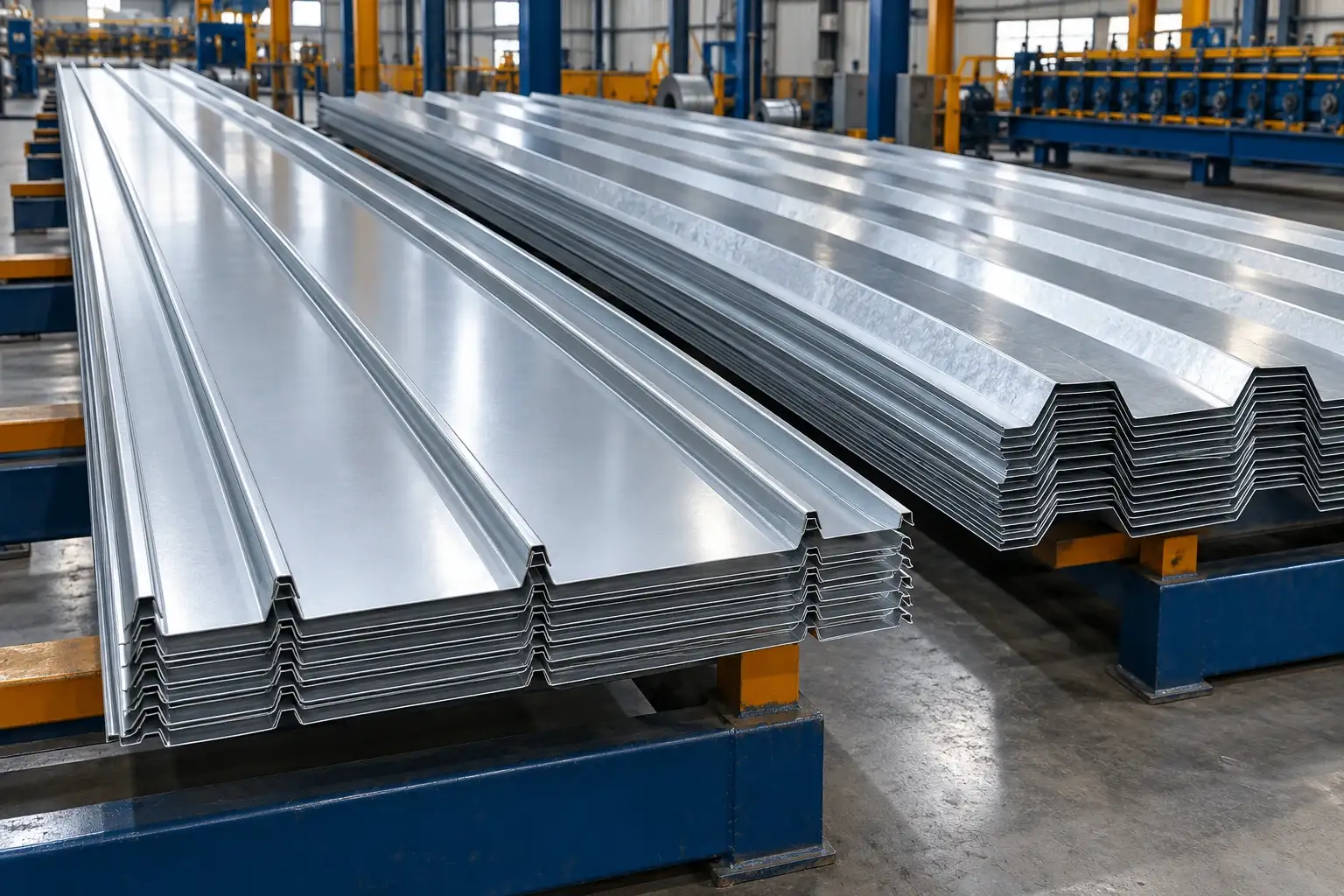
Clip Lock Screwless Roof Sheet

Every screw through a roof sheet is a hole, and every hole is a future leak. The clip-lock screwless roof sheet removes them entirely. Panels lock to hidden clips beneath the surface, so nothing pierces the weatherproof face. The result is a clean, unbroken roofline that stays watertight and lets the metal move freely as temperatures change.

What a Clip Lock Screwless Roof Sheet Is

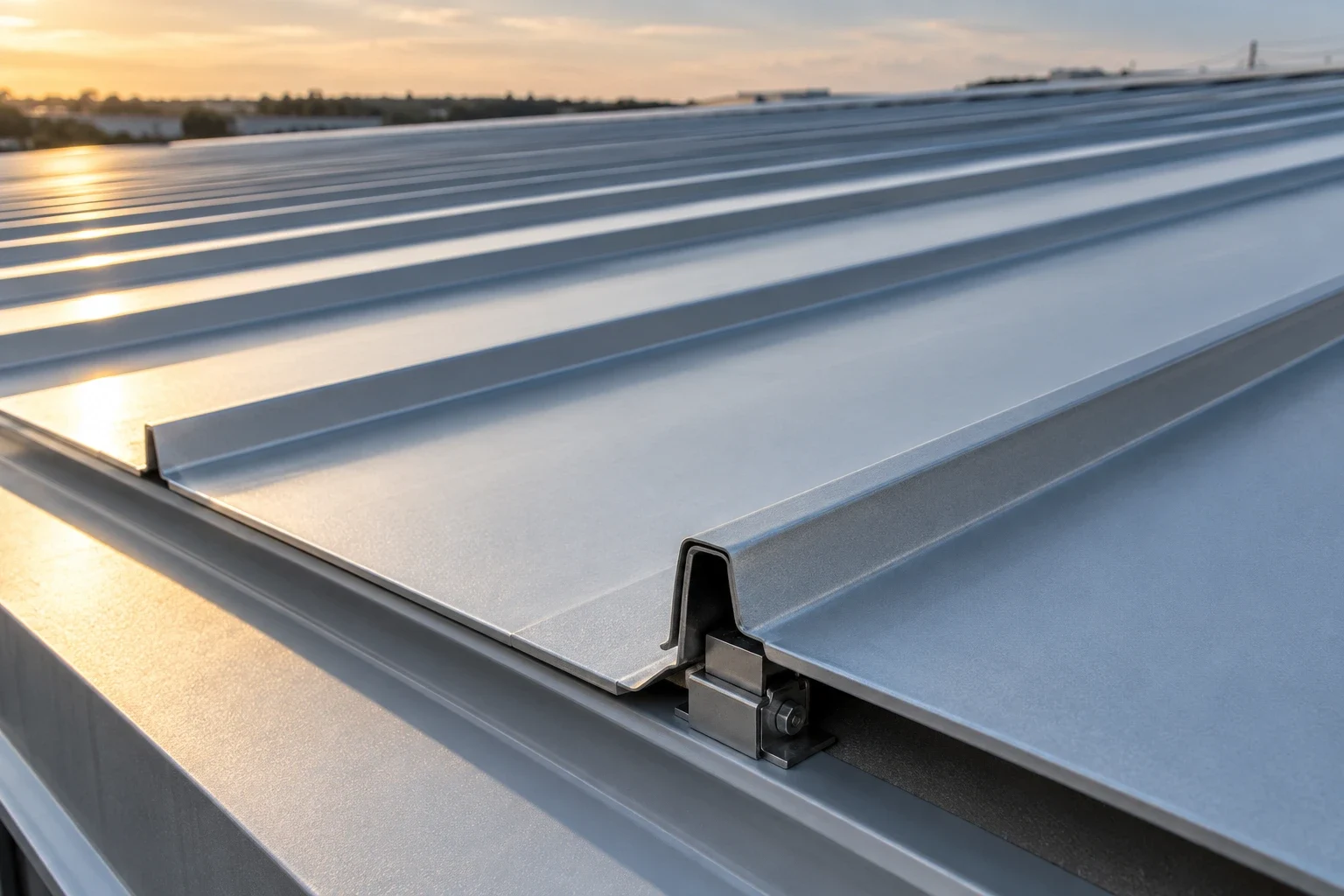
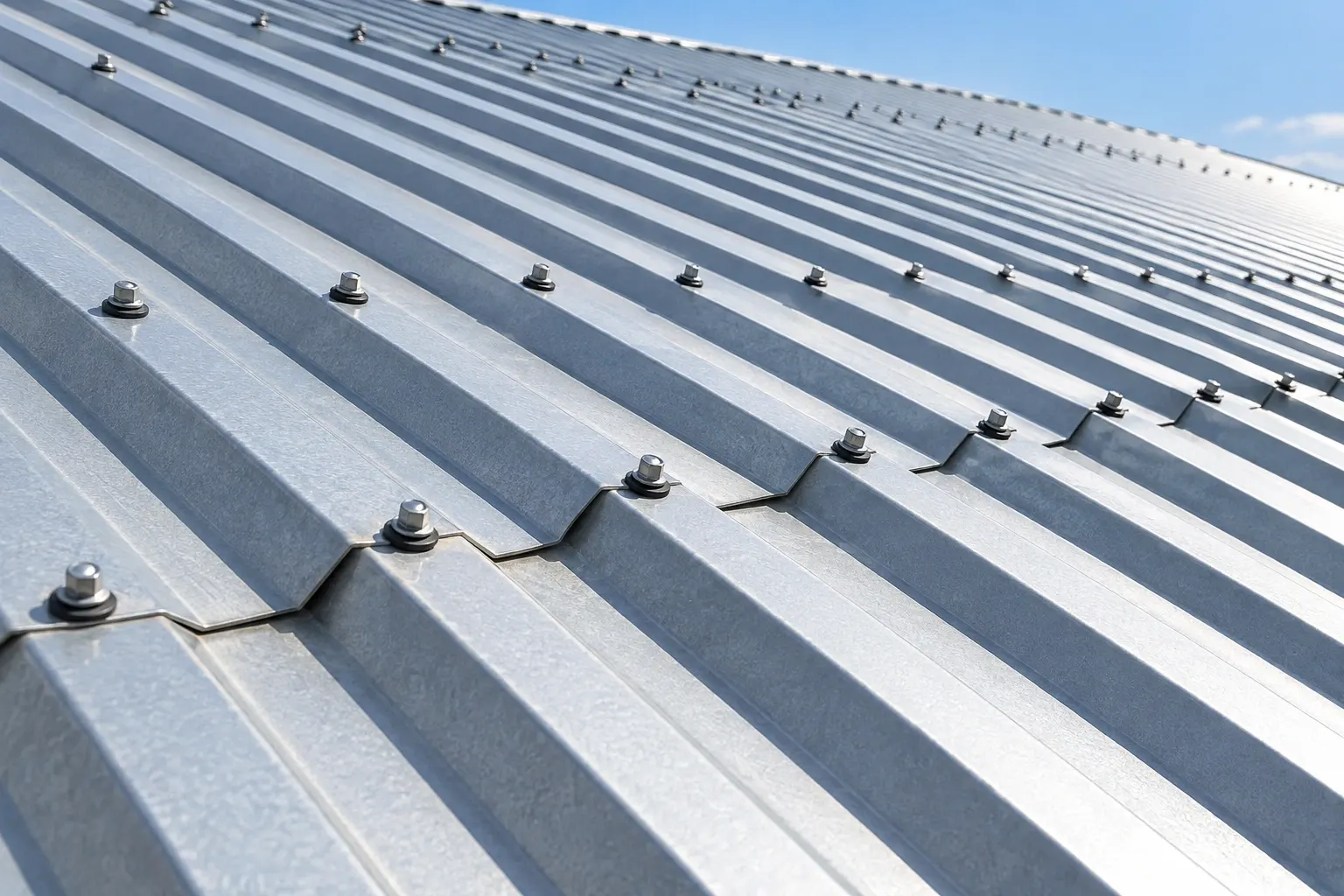
A clip lock screwless roof sheet is a concealed-fix roofing system where the panels are held down by hidden clips rather than screws driven through the face. In a traditional screw-down roof, fasteners punch straight through the sheet into the purlin below, leaving thousands of penetrations across a large roof, each sealed only by a rubber washer that ages and fails. The clip lock system works differently. Clips are fixed to the purlins first, then the sheet’s raised side ribs snap or fold over those clips, locking the panel in place without a single hole in the watertight surface. Adjacent sheets interlock rib to rib, forming a continuous, sealed seam that runs up the slope. What the eye sees is a smooth roof with clean vertical lines and no visible fixings, which is why it suits both industrial spans and architecture-led buildings.

How the Concealed Clip Actually Holds the Roof

The clip is the heart of the system and does more work than its size suggests. Each clip is screwed to the purlin, and its upstand is captured inside the interlocking seam when the next sheet is engaged, so the fastener sits safely under the panel, never exposed to rain or sun. This hidden position is why the fasteners do not corrode, the washers do not perish, and the fixing holes cannot elongate the way face-driven screws do over years of movement. The clip anchors the sheet against wind uplift, transferring suction loads from the panel down into the structure through the seam. Because the connection grips the rib rather than piercing the pan, the load path remains intact without compromising the waterproof line. Clip spacing is set to match the wind loads the roof must resist, so the same profile can be engineered for calm sites or exposed, high-wind locations.

Why Thermal Movement Makes Screwless Roofs Last

Metal roofs are exposed to the outdoors, and metal expands in heat and contracts in cold. On a long panel run, the daily and seasonal movement adds up to real distance, and a roof that cannot accommodate it pays the price. In a screw-down roof, the sheet is pinned tight at every fastener, so as the metal tries to move it drags against fixed screws, slowly enlarging the holes, loosening the seals, and creating the wavy oil-canning that spoils an older roof. A clip-lock system allows the panel to breathe. The sheet is engaged with the clips but not pinned rigidly through its face, so it can slide slightly as it expands and contracts without stressing the fixings. This freedom of movement is a major reason concealed-fix roofs outlast through-fastened ones, especially on the long, unbroken slopes common in warehouses and industrial sheds.

Where Clip Lock Roofing Delivers Most Value

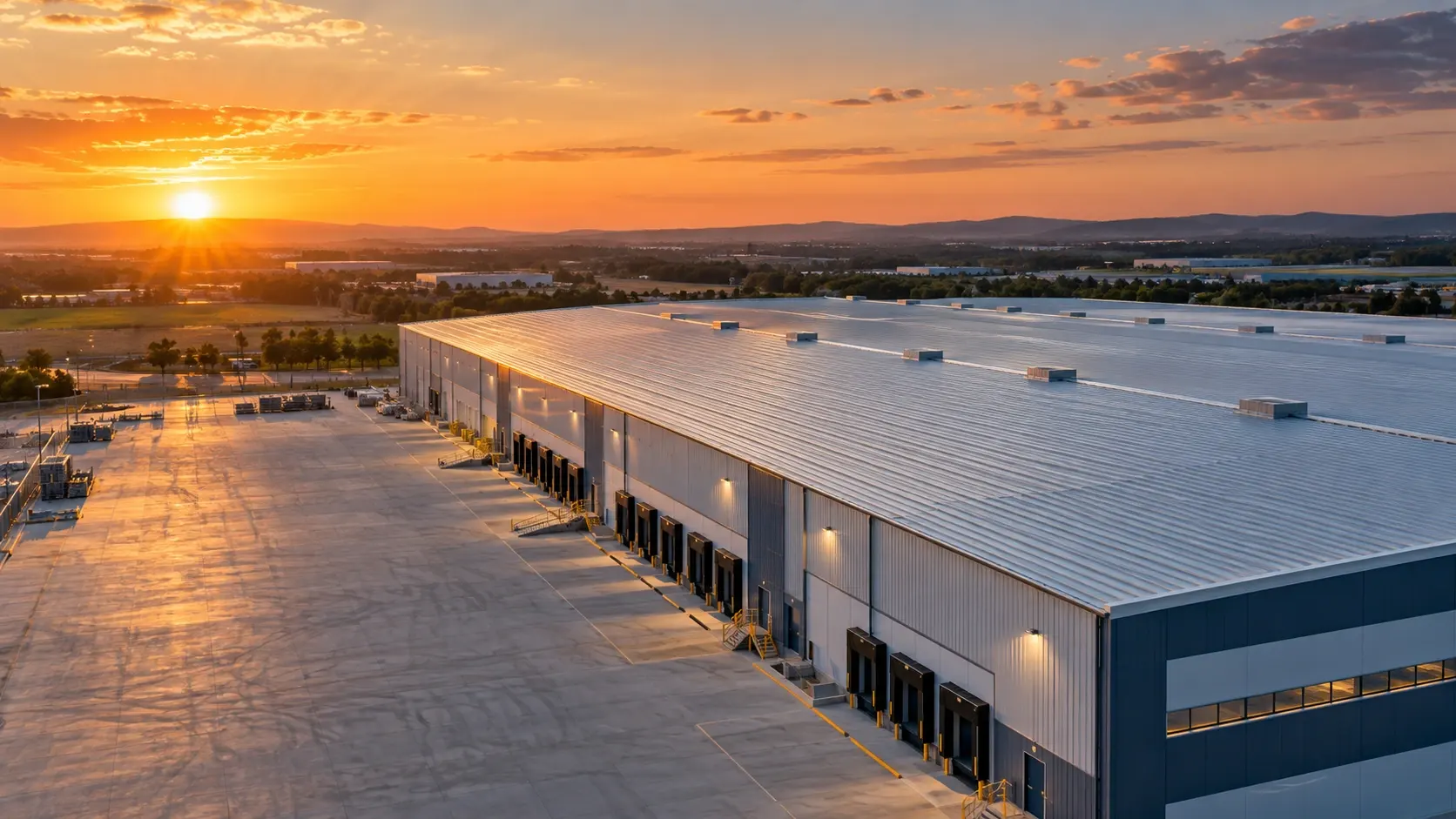
Clip lock roofing earns its place wherever a roof must stay watertight for the long term with minimal upkeep. On large industrial spans, warehouses, and factories, the absence of face fixings eliminates thousands of potential leak points across a single roof, which matters most on low-pitch slopes where water tends to linger. In high-wind and coastal regions, the concealed clips resist uplift while the sealed seam and protected fasteners shrug off corrosion that would attack exposed screws. For commercial and architectural buildings, the clean, screwless surface delivers the crisp, modern roofline that designers want, without sacrificing performance. The sheets are roll-formed from coated steel, typically galvanised or galvalume, so corrosion resistance is built into the metal itself. Across all these uses, the pattern is the same: fewer penetrations, freer movement, and a roof that keeps performing long after a screw-down roof would need attention.

Why Choose a Clip Lock Screwless Roof Sheet

A roof is judged over decades, not on the day it goes up. Two roofs can look almost identical on completion, yet perform completely differently after ten years of sun, rain, and thermal cycling. The difference usually comes down to how the sheets are fixed. The clip lock screwless system was designed to solve the weaknesses that eventually catch up with through-fastened roofs, and its advantages compound the longer the roof is in service.

No Penetrations, No Leak Points

The single biggest weakness of a screw-down roof is obvious once you count it: a large roof carries thousands of screws, and every one is a hole through the waterproof surface. Each relies on a rubber washer that hardens and cracks under UV light, and once a washer fails, the hole leaks. The clip lock system removes the problem at the root by keeping every fixing beneath the surface. With nothing piercing the weatherproof face, the most common cause of roof leaks simply does not exist. For a building owner, that means far fewer callbacks, less water damage to stock and interiors, and a roof that holds its integrity through heavy rain and years of exposure.

Built to Handle Movement Without Fatigue

Because the panels are free to expand and contract, the roof is not slowly tearing at its own fixings every time the temperature swings. Through-fastened roofs fatigue precisely because they fight this movement, elongating holes and loosening seals until leaks appear. The clip lock design works with thermal movement instead of against it, so the fixings stay sound and the sheet stays flat rather than developing the buckled, oil-canned look of a tired roof. On the long panel runs typical of industrial buildings, where thermal movement is greatest, concealed-fix systems pull ahead.

Strength Against Wind Uplift

Roofs fail catastrophically in storms when wind suction lifts the sheets. The clip lock system anchors each panel through the seam into the structure, and clip spacing can be tuned to the specific wind loads a site faces. This gives the roof engineered uplift resistance without adding face fixings, so a building in an exposed or coastal location gets the holding power it needs while keeping the sealed, penetration-free surface. Performance and weathertightness are delivered together, not traded off against each other.

A Cleaner Roof and Lower Lifetime Cost

The concealed fixings also give the roof its clean, modern appearance, unbroken by rows of screw heads, which is increasingly valued on commercial and visible buildings. But the greater savings lie in the total cost of ownership. A roof that resists leaks, corrosion, and fastener fatigue needs far less maintenance and lasts substantially longer before replacement. The higher initial cost of the system repays itself in years of untroubled service.
 
Taken together, no penetrations, free thermal movement, engineered wind resistance, and a clean, low-maintenance finish make the clip lock screwless roof sheet a genuinely long-term roofing choice. It is built for buildings whose roofs need to keep working quietly, year after year, without becoming a recurring problem.

Ready to Start Your Project?

Get in touch today for a FREE consultation and customized quote.

FAQs

1. How is a clip lock roof sheet fixed if there are no screws?
Clips are screwed to the purlins first, then the sheet’s raised side ribs lock over those clips. The fasteners sit hidden beneath the panel, so nothing pierces the watertight surface. Adjacent sheets interlock rib to rib to form a continuous sealed seam.
A screw-down roof has thousands of holes in its surface, each sealed by a rubber washer that eventually cracks from UV exposure and leaks. The clip lock system keeps every fixing under the surface, so the most common source of roof leaks is removed entirely.
Yes, and this is a key advantage. The sheet engages the clips without being pinned rigidly through its face, so it can slide slightly as it expands and contracts. This prevents hole elongation, seal failure, and oil-canning that affect tightly fastened roofs.
It is. The clips anchor each panel through the seam into the structure to resist wind uplift, and clip spacing can be tuned to the wind loads at a specific site. This lets the same profile suit both sheltered and exposed or coastal locations.
They are roll-formed from coated steel, usually galvanised or galvalume, so corrosion resistance is built into the metal. This suits them to industrial, coastal, and long-life applications where the roof must resist rust as well as leaks.

Need a Reliable Steel Structure?

Connect with our experts today to get your project started hassle-free.