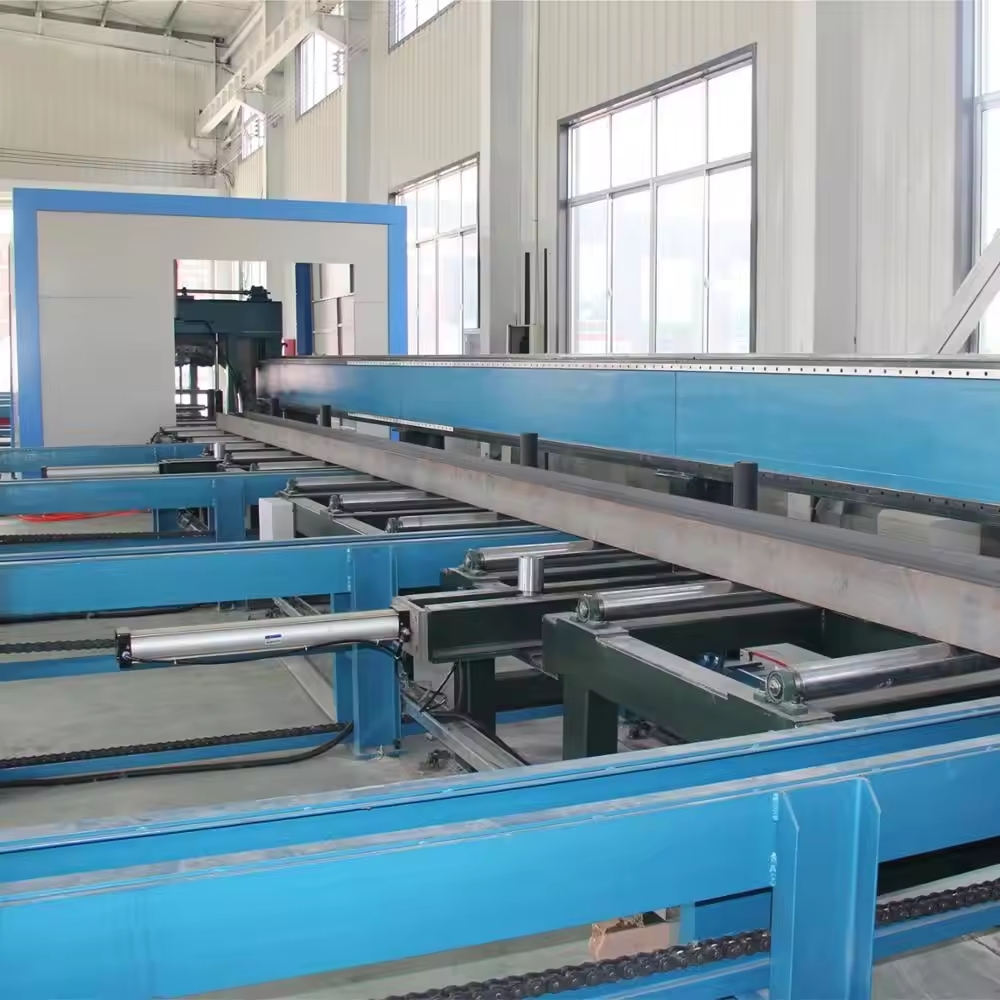
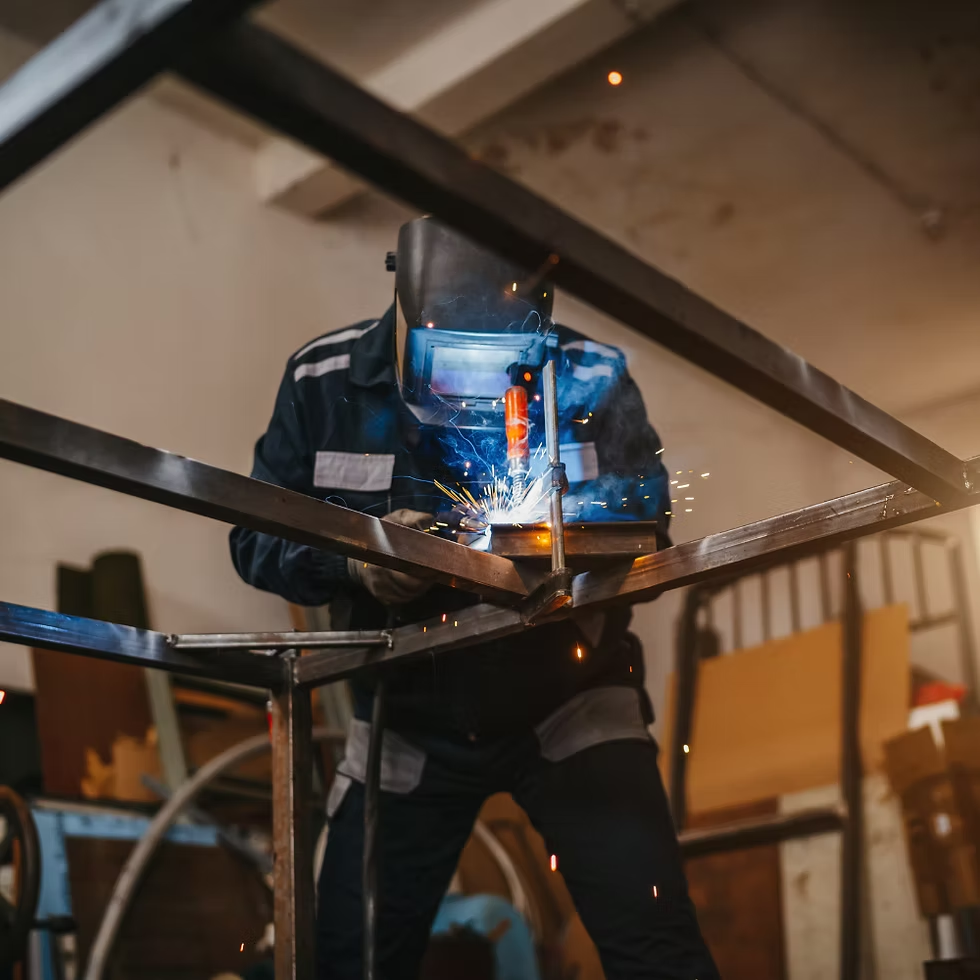
The weld between flange and web is where a built-up beam succeeds or fails. It is a structural connection, not a cosmetic one, and it runs the entire length of every load-bearing member in the building. That is why moving beam welding onto a dedicated, automated line is one of the most consequential decisions in a PEB workshop. The benefits extend from raw material costs to the safety of the finished frame.
Weld Quality That Carries Load
A fillet weld joining web to flange transfers shear between them, letting the two act as a single beam. If that weld is shallow, inconsistent, or full of slag traps, the section cannot develop its designed strength. Submerged arc welding on an automated line lays a deep, fully fused bead with steady penetration, and it maintains that quality along the entire beam and across the entire batch. Manual welding of long seams inevitably varies as the welder fatigues or the arc wanders. The line removes that variability, so an engineer can design to the weld’s rated capacity with confidence that every member actually meets it.
Straight Beams Out of a Heat-Intensive Process
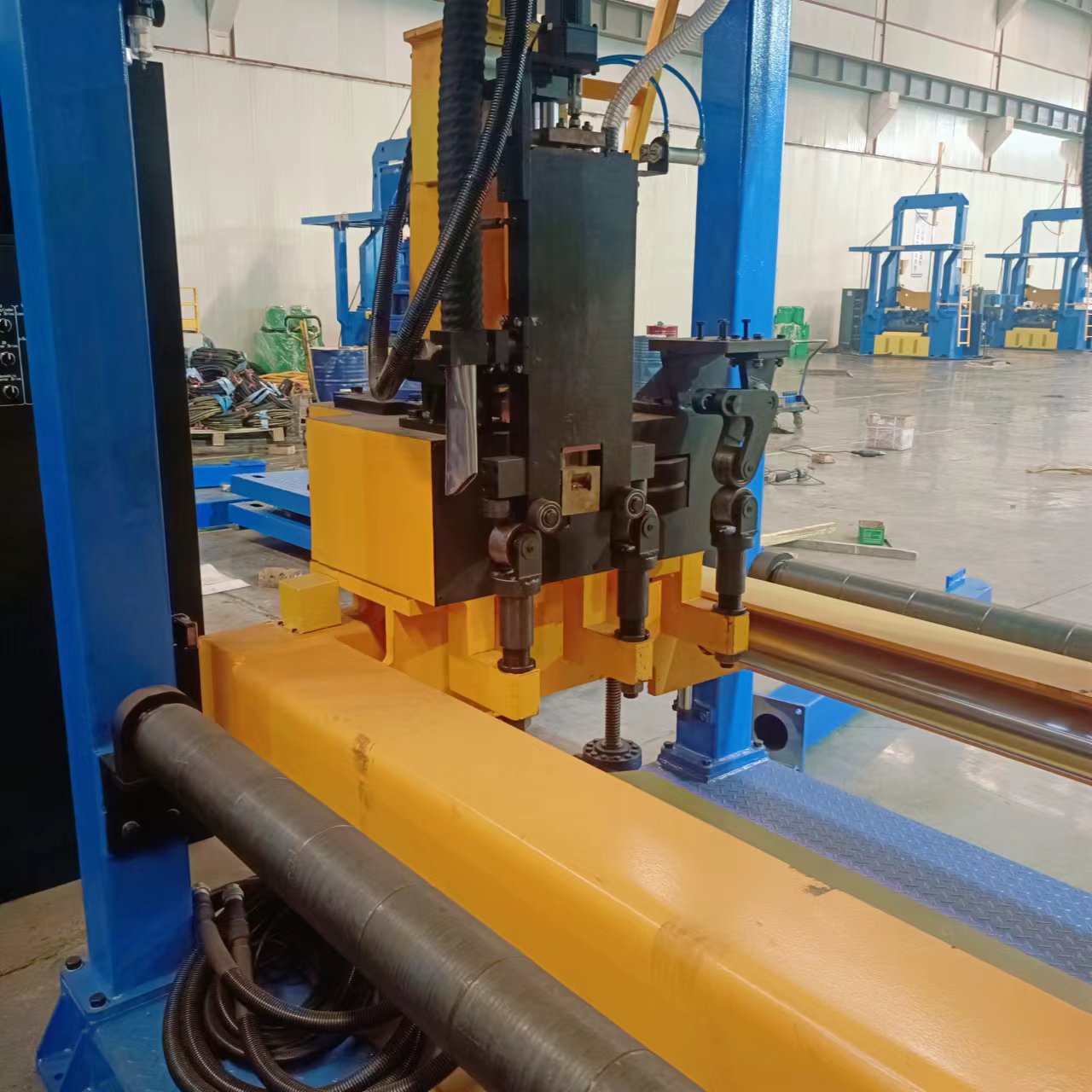
Welding is a fight against distortion. The intense, localised heat of the arc makes steel expand, then contract as it cools, and uncontrolled shrinkage bows and twists the beam. A crooked beam is not a cosmetic flaw; it will not sit true in the frame, and it forces rework or field adjustment during erection. The line manages this by balancing welds on opposite sides of the web, controlling the welding sequence, and finishing with hydraulic straightening. Beams leave straight and to tolerance, ready to bolt into the structure without a fight on site.
Speed That Keeps the Whole Shop Moving
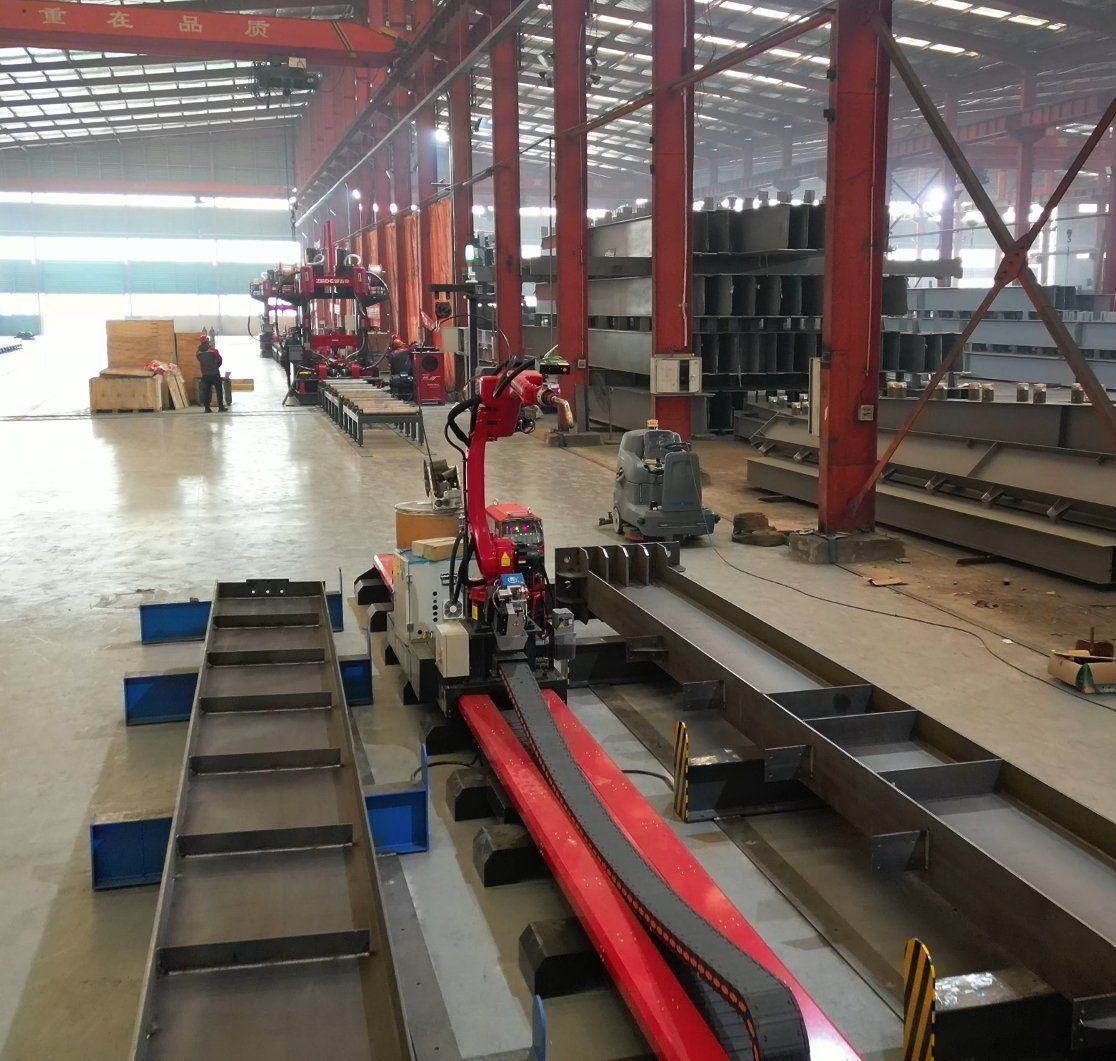
Beam welding is a bottleneck when done by hand because the seams are long and slow. SAW runs at high current with high deposition rates, and twin-wire heads push output higher still, so the line welds far more metres of seam per shift than manual stations. Since every other stage- cutting, blasting, painting- waits on welded beams, accelerating this step lifts the throughput of the entire fabrication flow. For a workshop feeding a construction schedule, that pace is often the difference between hitting a deadline and slipping it.
Freedom to Build the Beam the Design Needs
Because the line fabricates beams from plate rather than buying fixed rolled sizes, it unlocks tapered and variable-depth members. That freedom is the economic heart of pre-engineered building, letting the design put steel exactly where the load is and strip it away where it is not. Realising those custom profiles at scale, with reliable welds on every one, is only practical with an automated line. It is what connects clever engineering on the drawing board to a real, buildable, cost-efficient frame.
Together, dependable weld strength, straightness, speed, and design freedom make the automated H beam welding line the backbone of serious PEB fabrication. It is where flat plate becomes a load-bearing beam, and where the strength promised on paper is actually built into the steel.