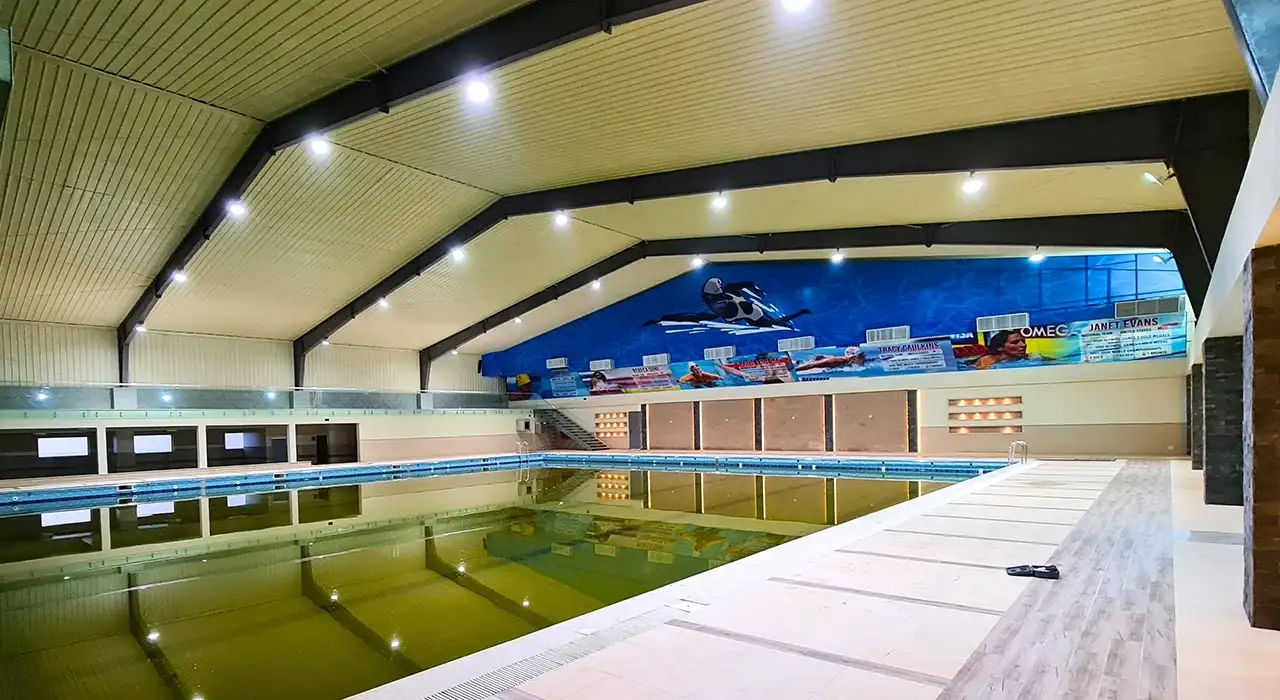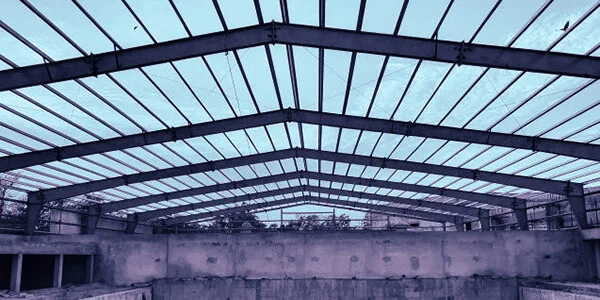

PEB For Swimming Pools

Why Pool Halls Punish Ordinary Steel Specifications

The air inside a pool hall is among the most aggressive interior environments in ordinary construction. Chlorine reacts with sweat and other body fluids to form chloramines, which are volatile, spread through the space, and settle in condensate on cool surfaces overhead where nothing washes them off.
 
A swimming pool steel structure must be specified for that chemistry from the first drawing. Civoool selects materials, coatings, and fixings for a chloramine atmosphere rather than adapting a standard industrial frame, because in this building type the corrosion case, not the load case, is what threatens people below.

The Overhead Risk That Standard Framing Ignores

This is not theoretical. In 1985, a pool ceiling in Uster, Switzerland, collapsed and killed twelve people, traced to chloride-induced stress corrosion cracking in stainless components. Further ceiling failures followed in the Netherlands. An indoor pool enclosure carries its risk directly above swimmers, so the elements that matter most are those nobody can inspect easily.
Those failures reframed chloramine corrosion protection as a structural duty. Austenitic grades such as 304 and 316, widely assumed safe, proved susceptible to cracking at ordinary pool temperatures once chloramine deposits concentrated on them. Load-bearing components near the ceiling are at greatest risk, which is exactly where a conventional specification puts them.

Specifying Materials for a Chloramine Atmosphere

Cracking happens where tensile stress meets a concentrated chloride electrolyte. Repeated condensation and evaporation build that electrolyte on unwashed overhead surfaces, so the answer is to avoid putting susceptible metals under sustained tension above the water. Where stainless steel is genuinely required, higher-alloy grades are specified rather than assuming 316 will suffice.
 
Our approach favours corrosion-resistant fasteners and coated carbon steel over exposed austenitic stainless in suspended applications, with connections designed so no single fixing failure drops anything into the pool. Galvanised screws are avoided here because zinc corrodes quickly in pool air, especially when in contact with dissimilar metals such as brass.

Three Rules That Keep a Pool Hall Safe

01

Overhead Design

Nothing susceptible hangs in tension above water, and every suspended element carries a redundant load path by design.

02

Access Routes

Walkways and inspection points are built in so hidden connections can actually be checked over the building service life.

03

Cleanable Skin

Interior surfaces are smooth and coated, so chloramine deposits rinse away rather than quietly accumulate over years.

Controlling Condensation Before It Starts

Pool halls run warm and very humid, with interior dew points that stay high year-round. Any interior surface that falls below the dew point will wet, and that wetting is what carries chloramines into contact with steel. Condensation control roofing therefore means continuous insulation with sufficient thermal resistance to keep the inside face of the roof warm, plus careful attention to thermal bridges at purlin lines, fixings, and eaves, where cold spots form first and go unnoticed the longest.

Getting the Vapour Barrier in the Right Place

Insulation alone does not solve it. Vapour barrier detailing determines whether moist air condenses harmlessly inside the hall or invisibly within the roof build-up, where it corrodes steel on the concealed side. The barrier must be on the warm side of the dew point and be continuous. Most failures happen at junctions rather than in the middle of a panel, so we detail wall-to-roof interfaces, penetrations, and openings as sealed assemblies rather than leaving them to site improvisation.

Working With the Ventilation Strategy

Either the structure and the air system solve this problem together, or they do not. Good pool hall ventilation design holds the space at slightly negative pressure relative to adjacent areas so humid, chemical-laden air is drawn in rather than pushed out into the building fabric. We coordinate early with the mechanical designer on duct routes, support steel, and supply positions, because air washed across cold surfaces is often what keeps them above dew point.

Decisions That Shape the Pool Building

Spanning the Water

A clear span roof frame removes columns from the pool surround, which matters for clear sightlines and safety supervision. We size it for the span you actually need rather than the largest one available.

Daylight Without Cold Spots

Rooflights and glazing improve a pool hall enormously, but they run colder than the roof around them. We position and specify these openings so that condensation does not simply relocate itself onto the glass.

Spectator and Plant Areas

Seating decks and plant rooms carry different loads and quite different air conditions. We separate them properly so the pool atmosphere does not migrate into spaces that were never designed to resist it.

Planning for Inspection

A pool structure needs periodic checking of overhead fixings. We provide safe access and a documented inspection schedule rather than leaving the operator with no practical way to reach anything.

Fabrication, Coating, and Erection Discipline

Coating integrity is the whole defence of a swimming pool steel structure, so it is protected in the shop and on site. Members are cut, drilled, and finished before delivery, because a hole drilled on site is a coating breach in the worst possible environment. Damaged coatings are made good rather than painted over. During erection, we check that the specified fixings were actually used, because a substituted fastener is invisible on a drawing and decisive in service.

What Drives the Cost of a Pool Building

Swimming pool construction cost in the structure package is driven by span across the water, eave height, the insulation and vapour control specification, and the corrosion grade of fixings and coatings. Those corrosion items look expensive against an industrial benchmark and are the last place to economise. Downgrading fasteners saves a visible amount at tender and creates a maintenance liability, and potentially a safety one, that outlasts the saving many times over.

Handover, Maintenance, and Operator Duties

A swimming pool steel structure stays safe only if it is operated and maintained as designed. We hand over the material specification, the fixing schedule, coating details, and inspection intervals, so future contractors do not substitute a susceptible grade during refurbishment. Water chemistry and ventilation are the operator’s daily contribution, since poor air handling concentrates chloramines faster than any structural measure can offset.

Discussing Your Pool Project With Civoool

If you are planning an indoor pool building design, involve the structural side early, while material grades and the envelope build-up can still be shaped around the atmosphere they will live in. Civoool designs, fabricates, and erects the enclosure, then documents what we used and why. Talk to us before the specification is fixed, and we will say plainly where the money needs to go.
Testimonial

What Clients Say About Us

FAQs

Chlorine disinfectants react with body fluids to form chloramines, which evaporate into the air and dissolve into condensate on cool surfaces. Repeated wetting and drying concentrates chlorides there. On unwashed overhead surfaces, this creates an aggressive electrolyte that attacks a pool roof structure from above.

Not automatically. Common austenitic grades, including 304 and 316, have suffered chloride-induced stress corrosion cracking at normal pool temperatures, resulting in fatal ceiling collapses. Susceptible grades should not carry sustained tension above water. Higher alloy grades or properly coated alternatives are specified instead.

With continuous insulation that keeps interior surfaces above dew point, a continuous vapour barrier on the warm side, and careful detailing at junctions and thermal bridges. The ventilation system must also maintain a slight negative pressure in the hall so that humid air is not pushed into the roof build-up.

Yes, provided the specification is written for the atmosphere rather than copied from an industrial shed. The framing system suits the clear spans a pool needs. What must change is the coating system, the fastener grade, the insulation, and the vapour control detailing throughout.

Overhead fixings and suspended components require periodic documented inspections throughout the building's life, with access designed in from the start. Because stress corrosion cracking gives little visible warning before failure, inspection intervals and material records should be agreed at handover, not improvised later.

Ready to Start Your Project?

Get in touch today for a FREE consultation and customized quote.