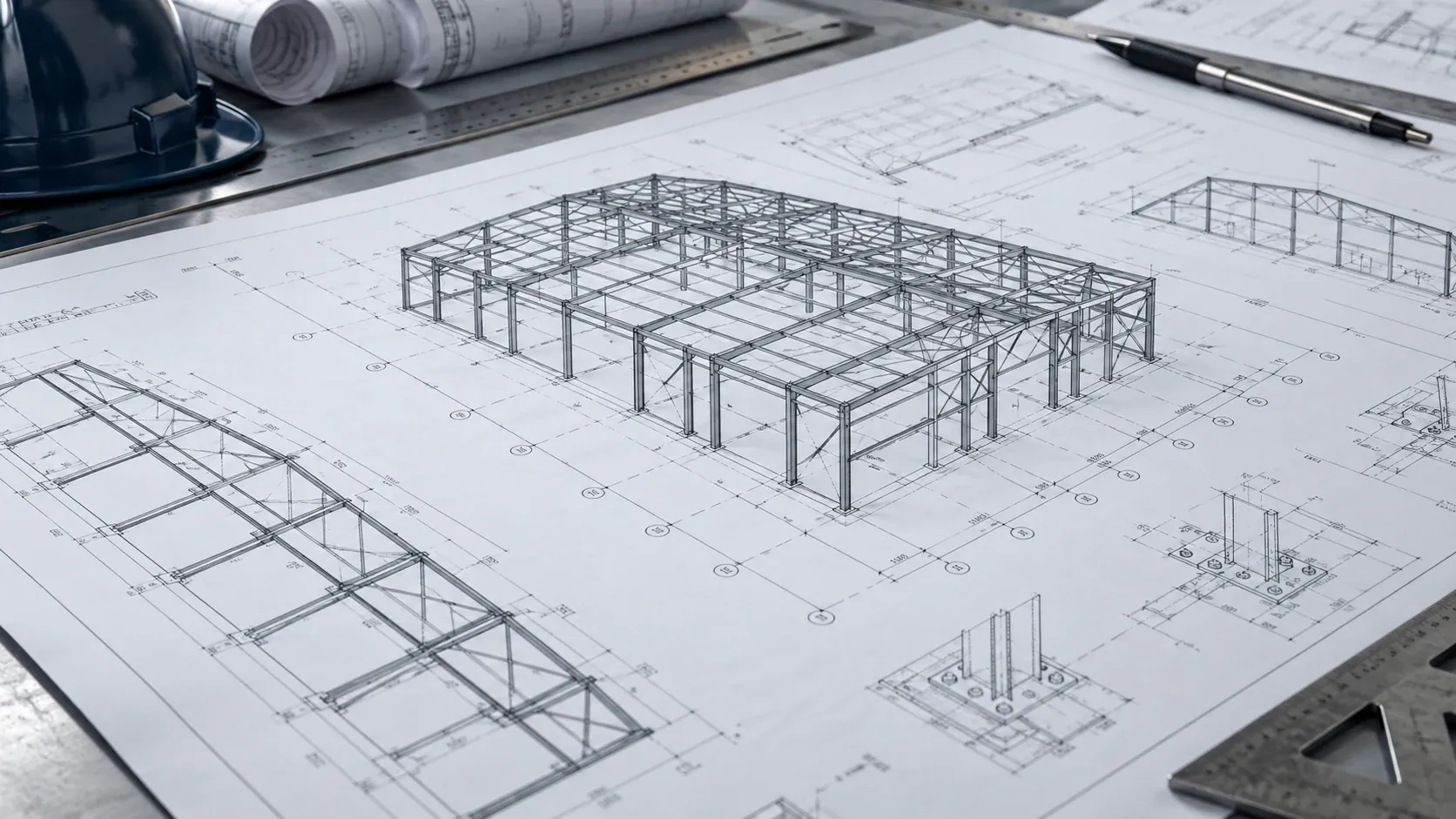
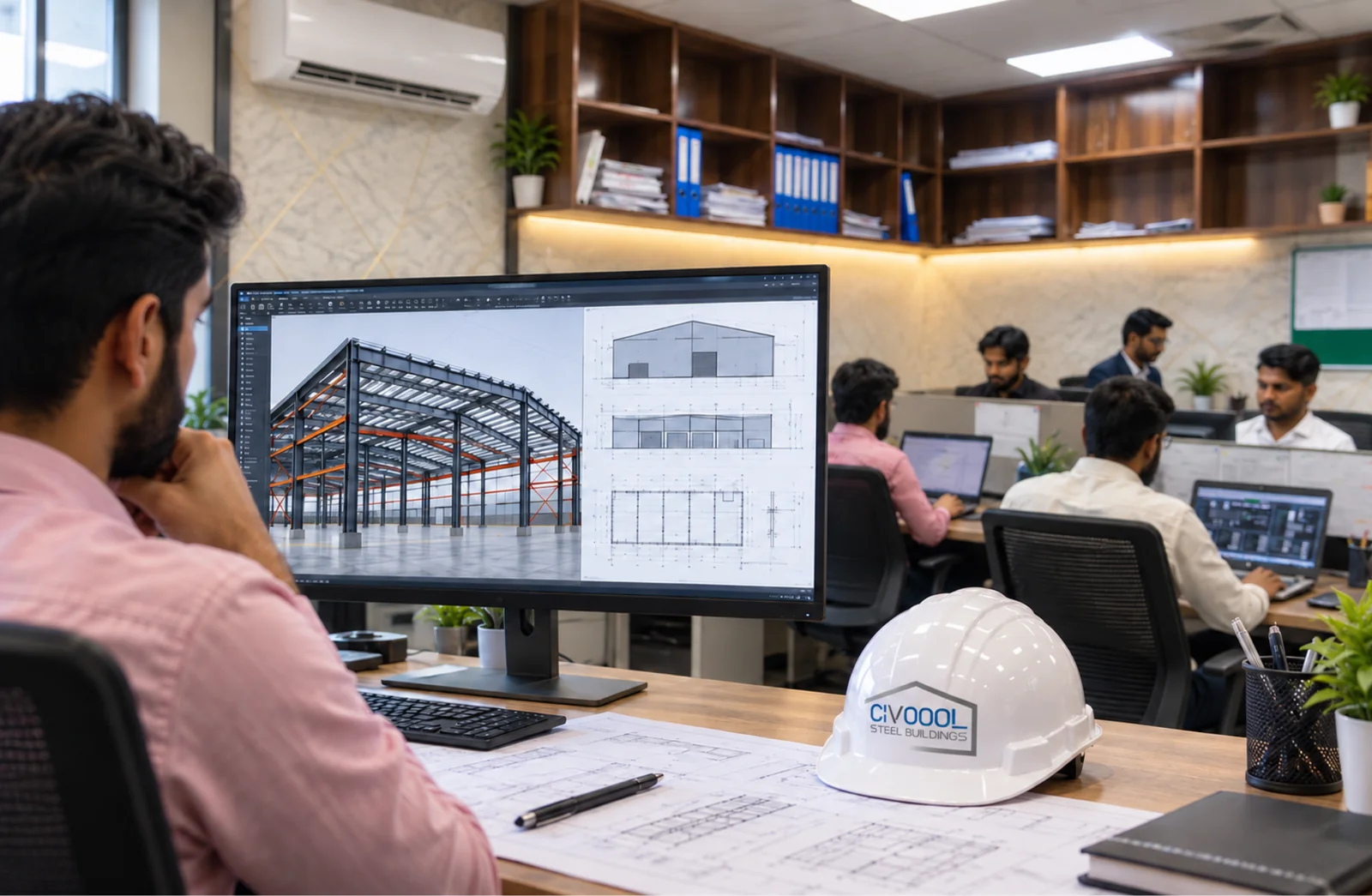
PEB Structure Design & Planning Services

Every Steel Frame Is Won or Lost at the Drawing Board

Our PEB structural design services turn a site brief and a load list into a frame that withstands real-world conditions. Before geometry, we fix the loads: dead, live, wind, seismic, and any crane or collateral load your operation adds. That load set drives every member size, every connection, every bolt.
 
Skip the load work, and you get one of two failures. Either the frame is over-steeled, and you pay for tonnage you never needed, or it is under-designed, and a purlin line deflects, cladding cracks, and the roof leaks. Getting the numbers right first is the whole job, and it is where a real design earns its keep.

Inside a Design Package: The Drawings You Actually Receive

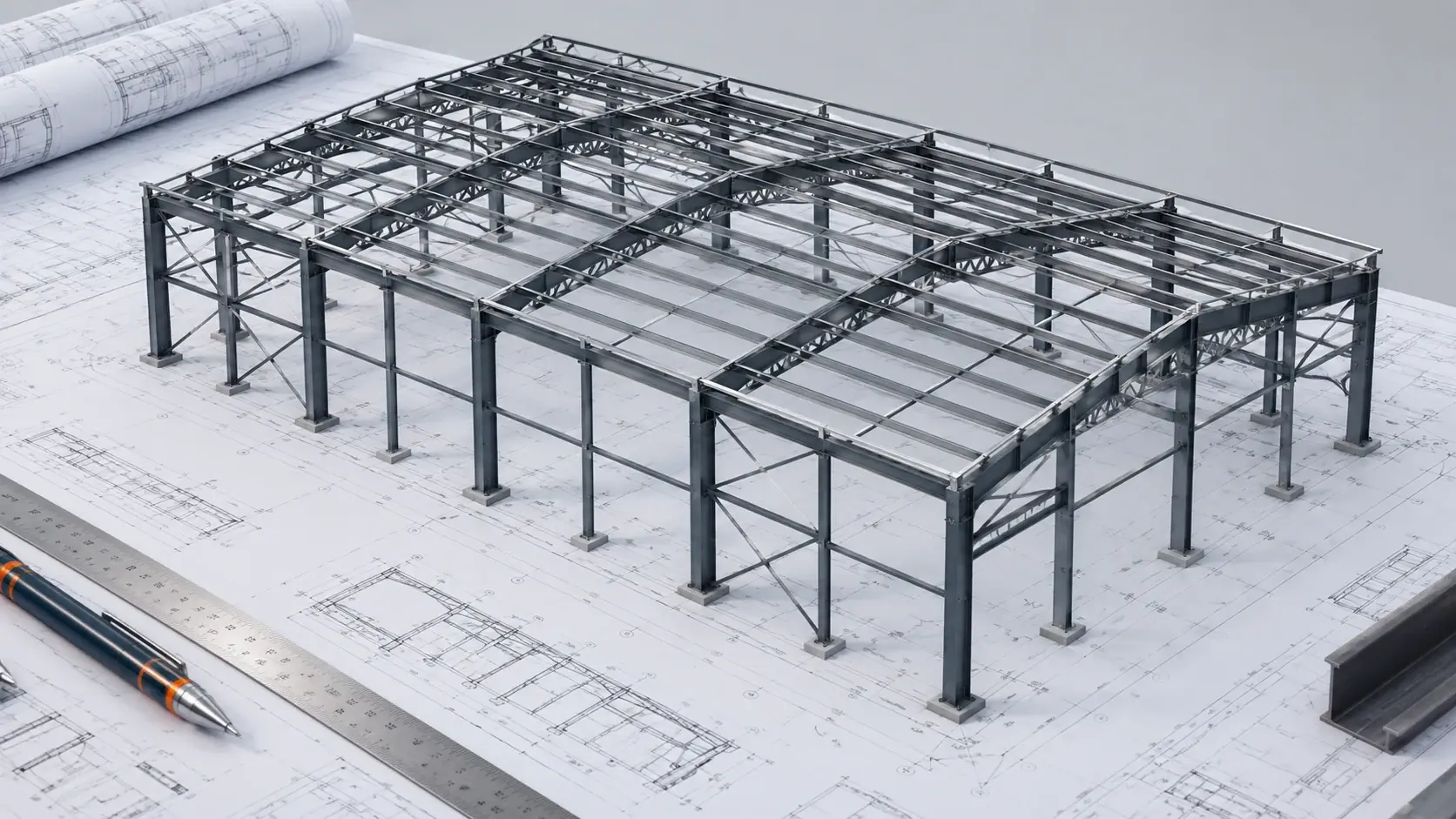
A design is not a pretty render. It is a defined set of documents that a fabricator and an erector can build from without having to guess at intent. When we hand off a project, the pre-engineered building design arrives as a coordinated package, every item cross-checked against the others so the shop floor never has to interpret a drawing or invent a dimension on its own.
The point of naming every deliverable is accountability. If the structural steel detailing is dimensioned for CNC and the anchor schedule lists column reactions, the foundation contractor and the fabricator work from exactly the same truth. That is what prevents a clean two-day column set from turning into a week of grinding, packing, and re-drilling on-site.

Load Paths, Deflection Limits, and the Codes That Govern Them

Every frame is a load path problem. Sheeting collects wind and gravity, passes it to purlins and girts, then to rafters and columns, then into the anchor bolts. Our steel frame load calculation traces that path member by member. Deflection governs more often than stress: rafters sit near L/240, purlins near L/180, crane girders tighter at L/600, since a sag jams the crane before steel gives.
 
Compliance is not decoration. We design to the combinations in ASCE 7 and the steel code, using the right importance factor for the risk category. PEB structural analysis models the whole frame, so sway, uplift, and seismic drift are caught in the model, not on site. Uplift is the quiet killer, peeling a roof from the fastener line inward.

Three Checks No Steel Frame Can Skip

01

Load Modelling

Full-frame model with dead, live, wind, seismic, and crane loads combined per code, not member-by-member guesswork.

02

Code Compliance

Designed to ASCE 7 combinations and steel code limits, with the risk-category importance factor applied to lateral loads.

03

Buildable Detail

Drawings dimensioned for the shop and connections fully detailed, so fabrication and erection follow the model exactly.

From First Sketch to Fabrication-Ready Drawings

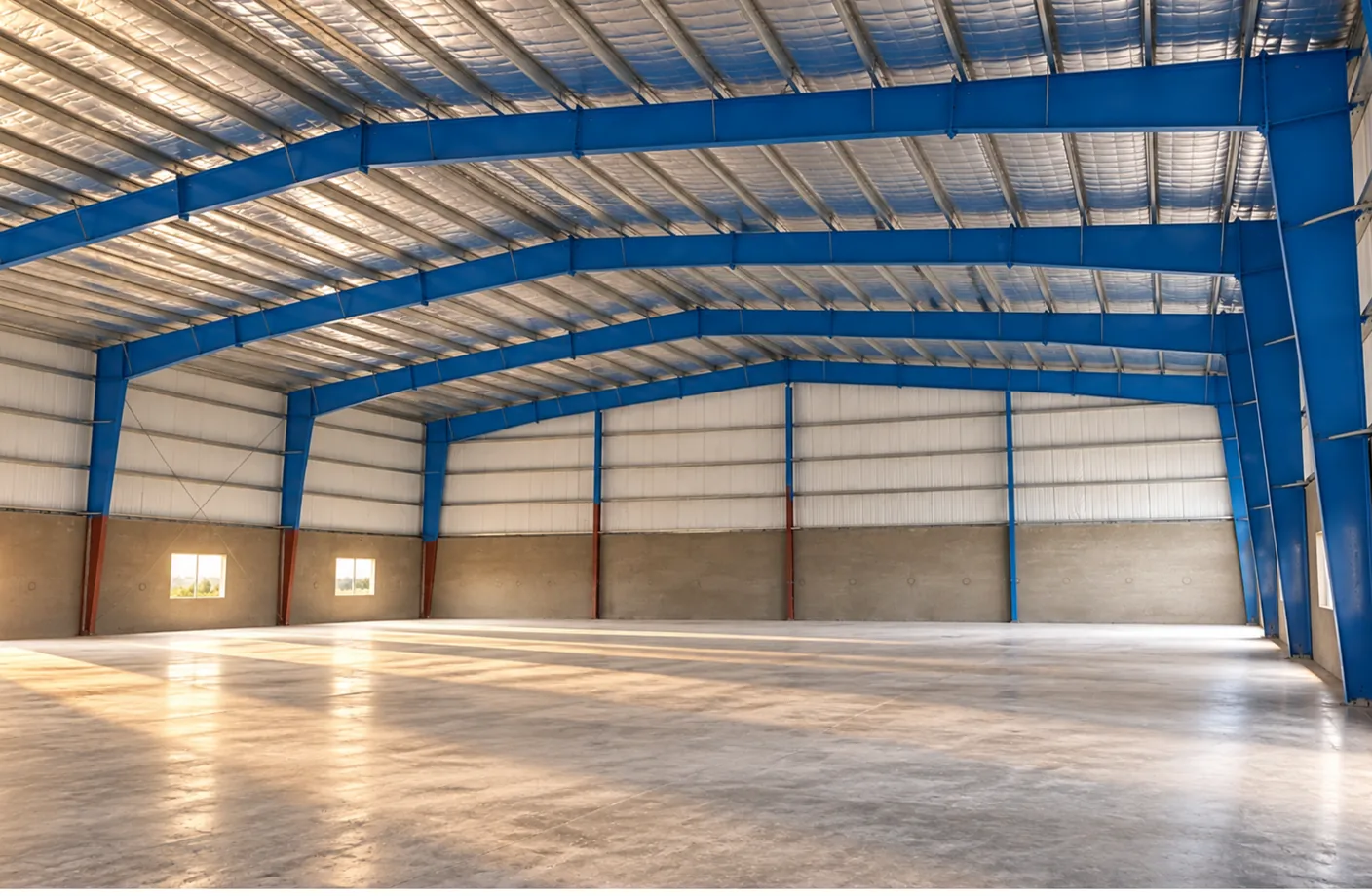
Our PEB structure design services open with requirements, not a template. We address span, height, bay spacing, roof slope, and clear-height requirements, then confirm the full-load environment for the site. Column-free span is the biggest cost lever in the whole design. Clear span past thirty metres gets expensive fast, so if your racking or process does not truly need it, an intermediate column can cut serious tonnage. We tell you that trade-off up front instead of quietly billing the steel.

Choosing Your Primary and Secondary Framing

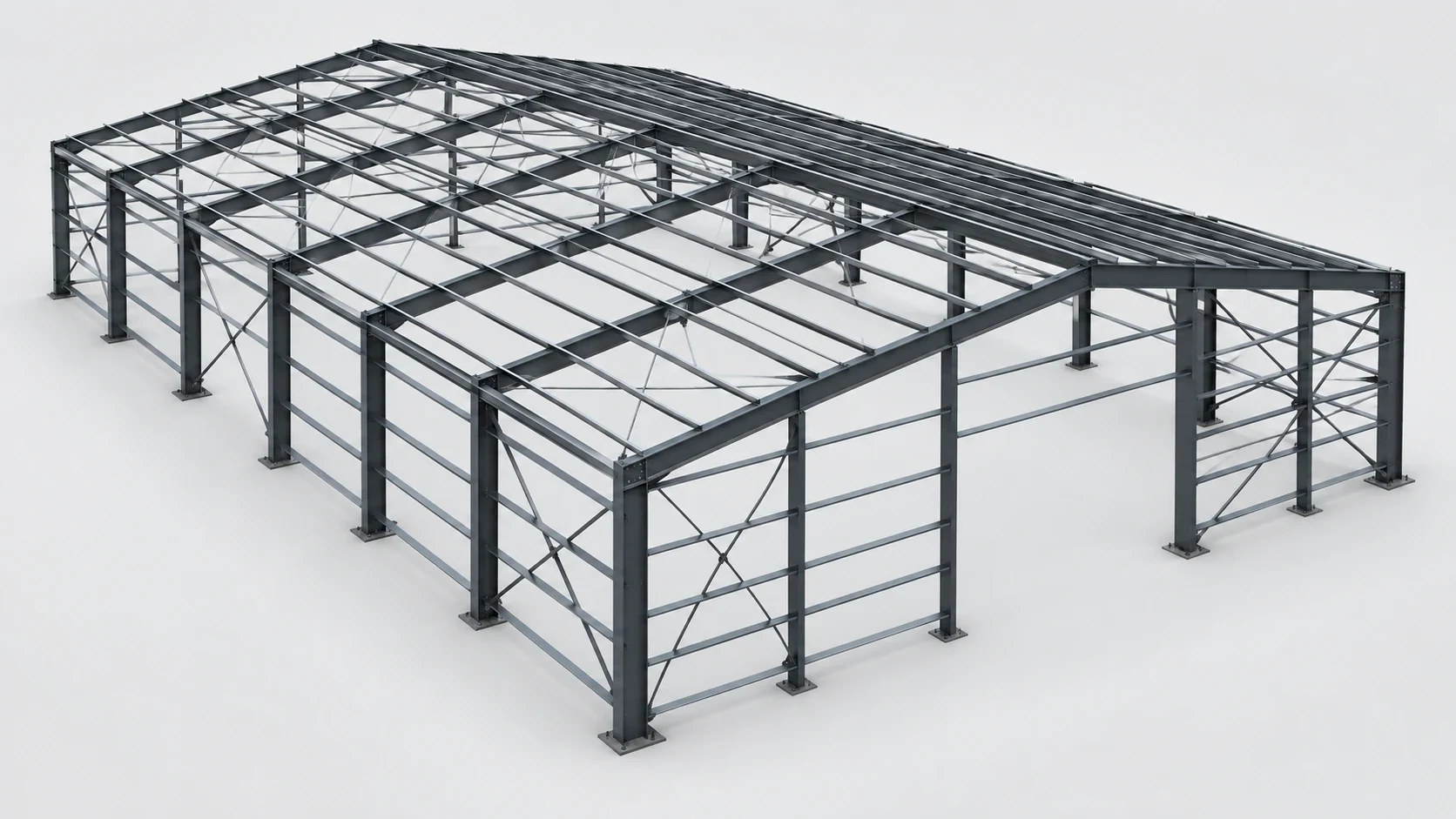
The primary and secondary framing decision shapes both cost and performance. Tapered built-up columns and rafters carry the main loads and allow us to match section depth to the moment diagram, placing steel only where bending demands it. Wind and seismic load design then sizes the bracing that keeps the frame square. Cold-formed Z and C purlins and girts carry cladding loads to the frame; their spacing is a direct trade between steel weight and sheeting gauge.

Why No Two Projects Get the Same Frame

A dry-goods warehouse, a crane-served workshop, and a cold-store shell are three different design problems even at the same footprint. Crane duty class, not just capacity, drives fatigue detailing on a light crane in constant service. Insulation and collateral loads affect the roof design, and a high seismic zone affects the bracing. Good PEB design consultancy means flagging all of these before drawings start, because a change made after fabrication is the most expensive change there is.

Four Details That Separate Real Engineering From Guesswork

Anchor Bolt Precision

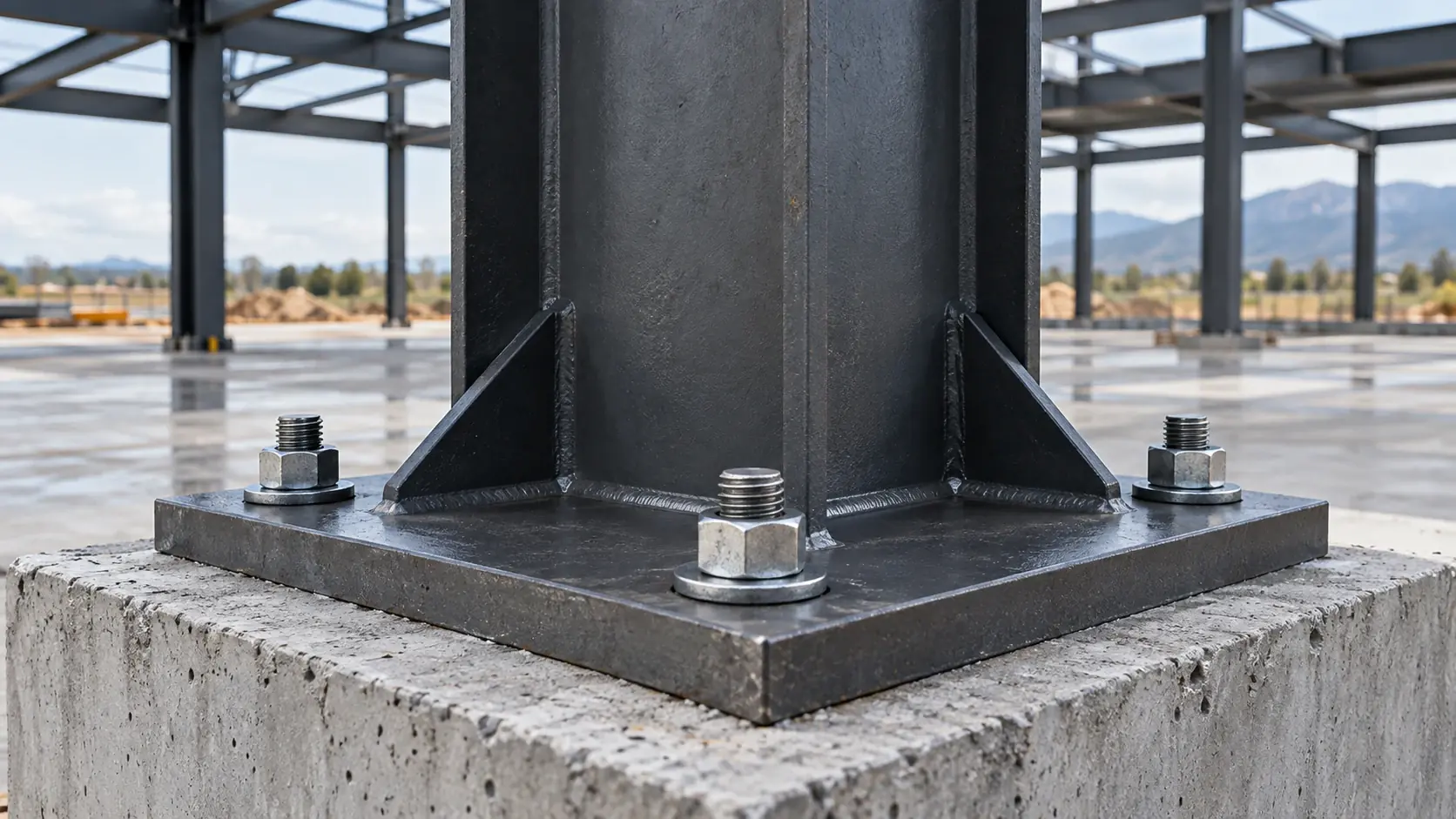
Anchor bolts set fifteen millimetres out of position can stall a column set for days. We issue a dimensioned bolt layout with tolerances so the foundation is right before steel arrives on site.

Connection Detailing

Connections carry the loads the members collect, so each is detailed and checked, not left to the shop. Clear PEB shop drawings show bolt grade, hole size, and weld so nothing is improvised.

Collateral and Future Load

Solar adds roughly fifteen kilograms per square metre of dead load. We ask about panels, ducts, and future mezzanines now, so the frame carries tomorrow’s load without a costly retrofit later.

Foundation Coordination

The design ends at a reaction schedule the foundation engineer can build to. Sharing column reactions and base shears early keeps the footing and the frame from ever being designed in isolation.

How Long Design Takes and What Slows It Down

Design time tracks complexity, not floor area alone. A clean rectangular shed moves quickly; add cranes, mezzanines, irregular geometry, or a high seismic category and the analysis and detailing both grow. We would rather spend the extra days in the model than discover a clash during erection. Freezing the brief early is the single biggest schedule saver, because every load change ripples through member sizes, connections, and every drawing already issued.

The Checks Every Drawing Clears Before Release

The PEB design process carries its own checking discipline. Calculations are reviewed against the model, drawings are checked against the calculations, and the anchor schedule is reconciled with the general arrangement before anything is released. This is where cannibalised or copy-pasted details get caught. One wrong purlin spacing repeated across twenty frames is a site-wide problem, so the review is systematic rather than a final glance.

Costly Design Mistakes We Eliminate Upfront

Most PEB failures trace to the same handful of misses: uplift under-checked at the eave, sway left loose so cladding cracks, crane fatigue ignored on a busy light crane, and collateral load forgotten until the solar contractor arrives. Local climate matters too, since wind and, in parts of the country, seismic demand set the lateral design. We build these into the load set from the start rather than patching them afterward.

Start Your PEB Design With Civoool

Because Civoool designs, fabricates, and erects under one roof, the design is written to be built, not just approved. If you have a site, a load requirement, or even a rough footprint, share it, and our engineers will walk you through the frame options and the honest cost trade-offs before any drawing is committed.
Testimonial

What Clients Say About Us

FAQs

They cover the full engineering package: load analysis, full-frame structural analysis, member and connection sizing, and a buildable drawing set. That set includes a stamped calculation report, general arrangement and framing drawings, an anchor bolt layout with reactions, and erection drawings with a marking plan.

PEB design cost depends on span, height, load conditions, and complexity such as cranes, mezzanines, or seismic demand. A simple rectangular shed costs far less to engineer than a crane-served workshop of the same footprint. Share your brief and loads, and Civoool can scope it properly rather than quote a blind number.

PEB design software typically includes dedicated steel-building analysis tools plus general packages such as STAAD.Pro, Tekla Structures, and AutoCAD for modelling and detailing. The tool matters less than the engineer driving it; the full frame is modelled so uplift, sway, and seismic drift are caught in analysis, not on site.

The PEB design process usually runs a few weeks for a straightforward building, longer for cranes, mezzanines, irregular geometry, or high seismic categories. Freezing the brief early is the biggest time saver, because any load change after drawings start ripples through member sizes, connections, and every sheet already issued.

Because loads decide everything downstream. Dead, live, wind, seismic, and crane loads drive member sizes, connections, and bolts. Fixing the layout first and forcing loads onto it produces either wasted steel or a frame that deflects, cracks cladding, and leaks. Load first is what keeps the design both safe and economical.

Our Services

Ready to Start Your Project?

Get in touch today for a FREE consultation and customized quote.