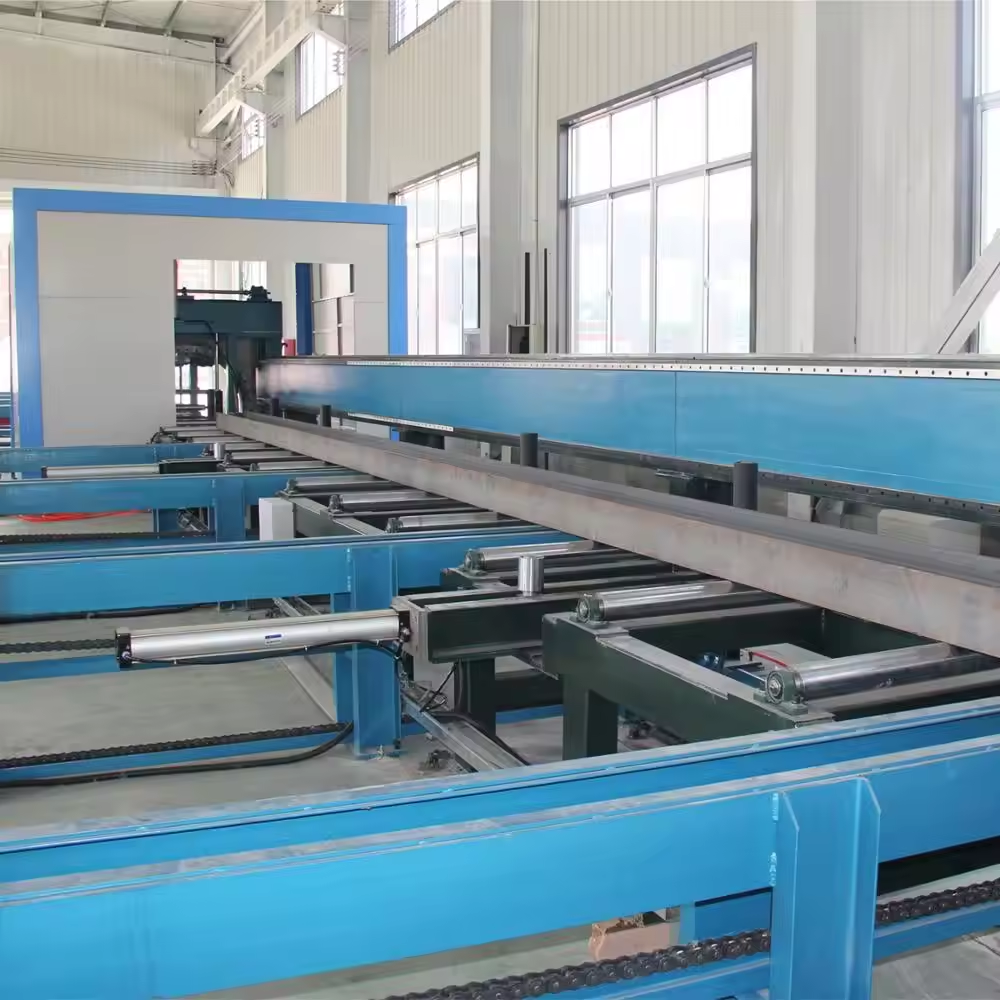
H Beam Welding Line

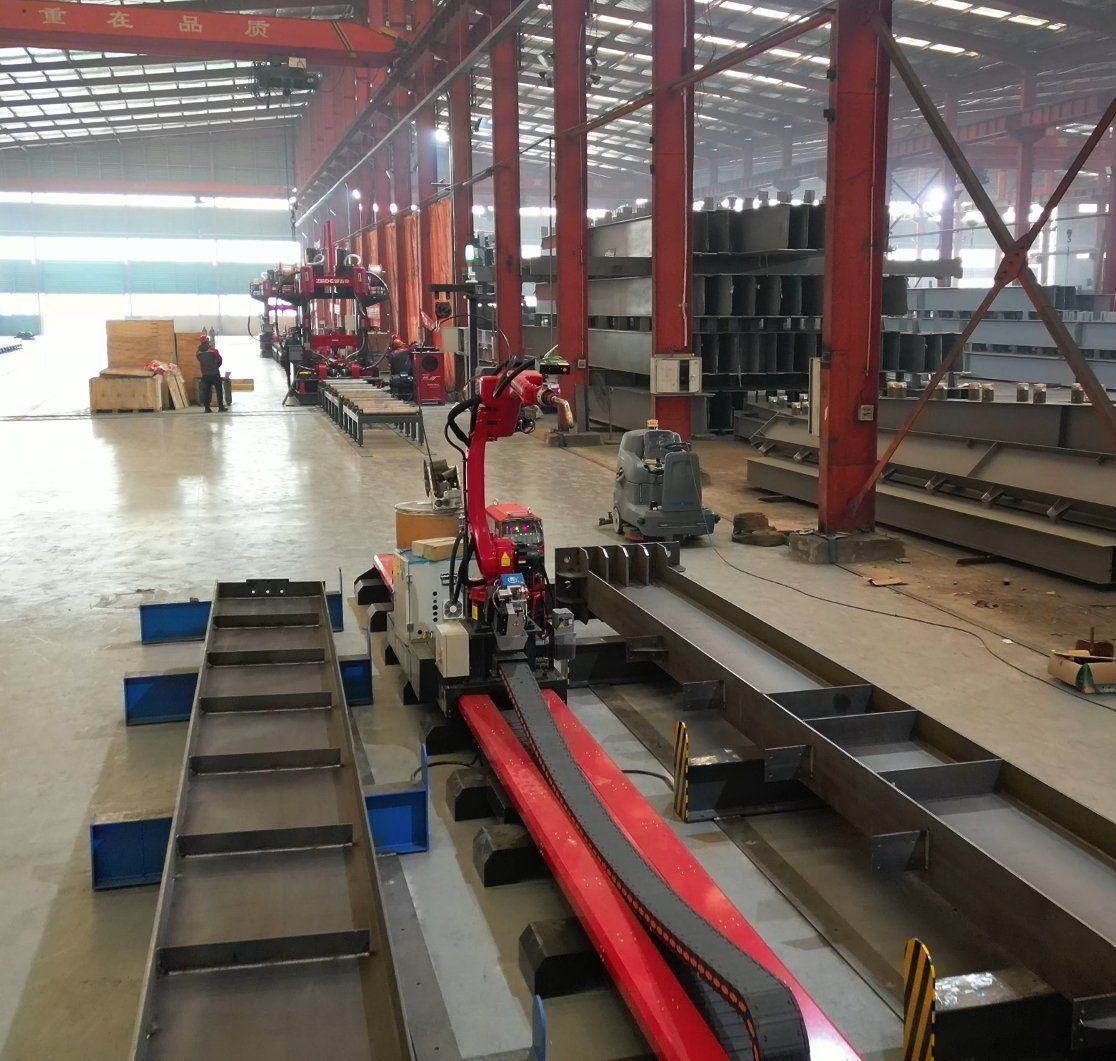
The H Beam Welding Line is Civoool Steel Structure’s production line for fabricating built-up H-beams, the welded columns, and rafters at the heart of every pre-engineered building. A web plate and two flanges are assembled, joined by submerged arc welding into one rigid section, then straightened into precise, high-strength beams.

What Is an H Beam Welding Line?

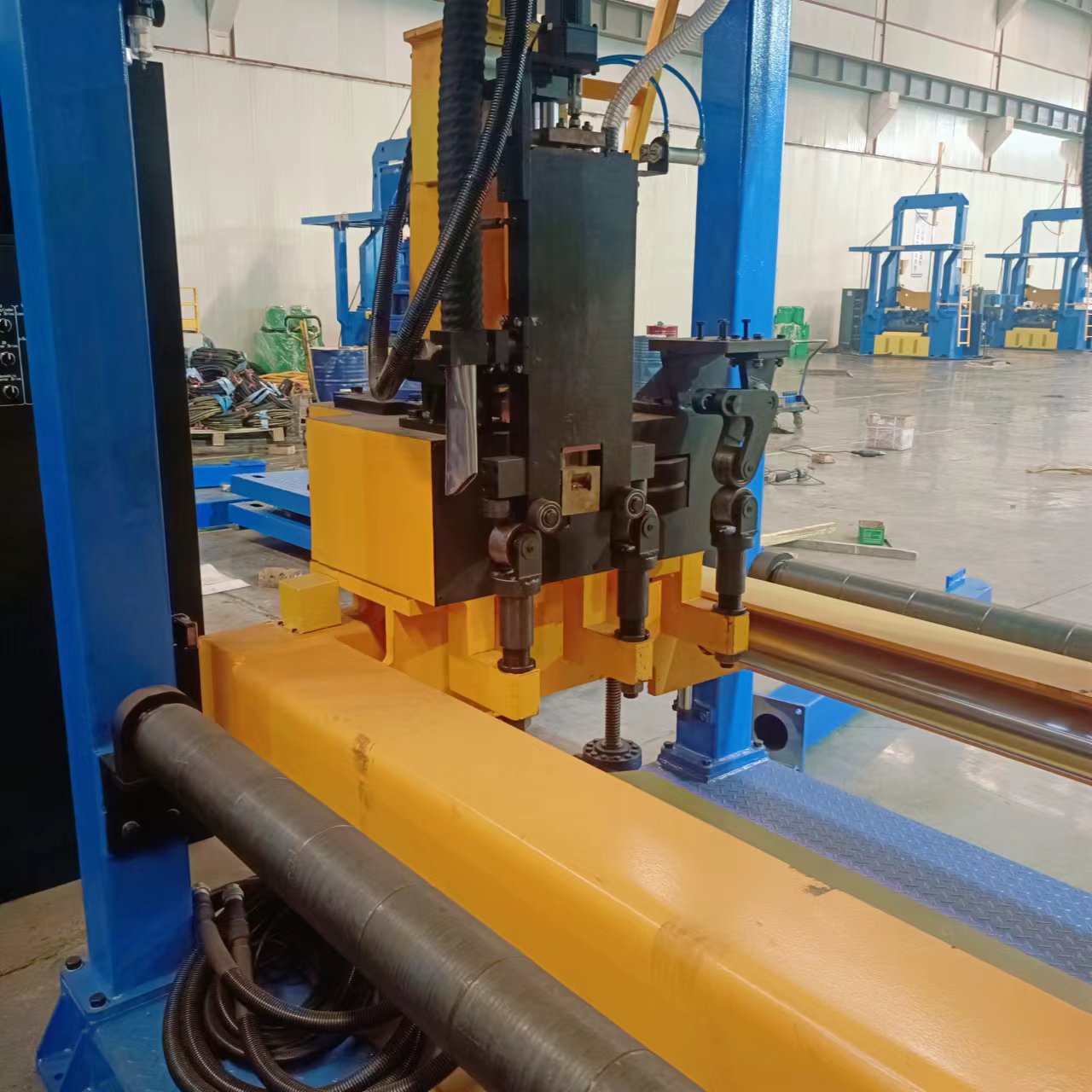
An H Beam welding line is an integrated set of machines that turns flat steel plate into finished structural beams. It works in three connected stages. First, an assembly machine positions a vertical web plate between two horizontal flanges and clamps them together to form the familiar H shape. Next, an automatic welding station joins the web to each flange with deep, continuous welds. Finally, a straightening machine corrects any bowing caused by welding heat, so the beam leaves the line straight and true. Running these steps in sequence means beams are produced quickly and to a repeatable standard. For a pre-engineered building manufacturer, this line is where the raw plate becomes the columns and rafters that carry the whole structure.

Submerged Arc Welding for Stronger Joints

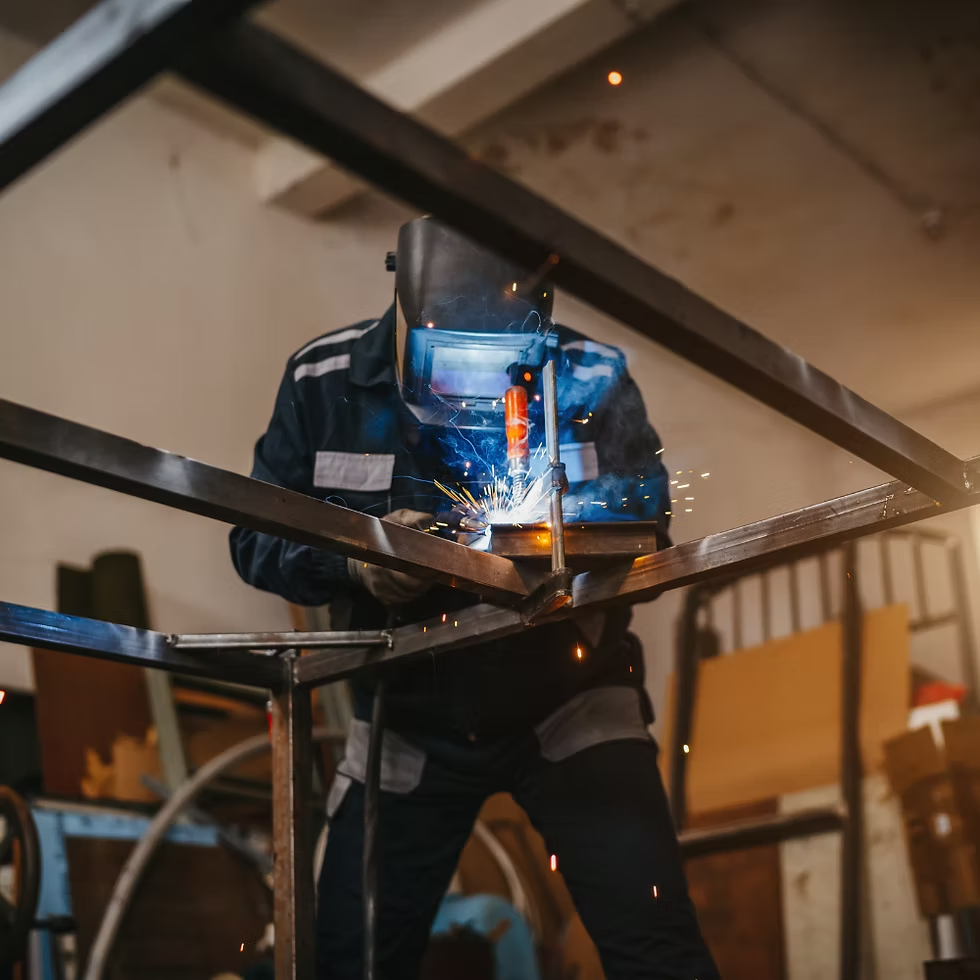
The welds that hold a built-up beam together are made by submerged arc welding, or SAW, the standard method for heavy structural steel. The arc burns beneath a blanket of granular flux, which shields the molten metal from the air and concentrates the heat where it is needed. This produces deep, fully fused welds with high deposition rates, very little spatter, and a clean, even bead. Because the joint between the web and the flange is welded continuously rather than in short manual runs, the finished beam behaves as a single solid member under load. Welds are checked for cracks, undercut, and slag before the beam moves on, so every column and rafter that leaves the line meets a consistent strength and quality standard.

Built-Up Beams Made for PEB Design

Pre-engineered buildings rarely use standard, off-the-shelf rolled beams. Instead, they rely on built-up sections welded to each project’s specific loads. Because the web and flanges are cut from plate, their depth and thickness can be varied along the length of the member, producing tapered columns and rafters that are deep where stresses are high and slimmer where they are low. This places steel only where the structure actually needs it, reducing weight and material costs without weakening the frame. A welding line enables these custom geometries to be produced in volume. The result is a building that is lighter, more economical, and engineered to its exact span, rather than over-built from generic stock sections that waste steel.

Assembly, Welding, and Straightening in One Flow

Keeping assembly, welding, and straightening on a single line is what makes the process both fast and accurate. The assembly stage fixes the geometry, holding web and flanges in correct alignment so the beam starts out square. Continuous welding then locks that geometry in place with strong, uniform seams. The intense heat of welding always pulls the flanges inward slightly, so the straightening stage presses them back to true before the beam is released. Handled as a single connected flow, each beam passes through the same steps at the same settings, keeping dimensions tight from the first member to the last. For Civoool, that consistency means the steel arriving on a project site fits together cleanly during erection.

Why a Dedicated Welding Line Builds Better Steel

Deep, Consistent Welds

The strength of a built-up beam lies in its welds, and this is where an automated line clearly beats manual work. Submerged arc welding lays down deep, fully penetrated seams at a steady travel speed, so the weld between web and flange is uniform along the entire length of the beam. There are no thin patches where a tired welder slowed down, and no cold starts between passes. Set once, the parameters are repeated for every member, so the hundredth column is welded to the same standard as the first. Continuous, high-quality welds let the section act as a single structural unit, carrying bending and shear loads exactly as the engineer calculated. For a building meant to stand for decades, that reliability is not optional.
 

Less Distortion, Truer Beams

Welding puts enormous, uneven heat into steel, and heat always moves metal. Left uncorrected, the flanges of a freshly welded H-beam pull inward, and the whole member can take on a slight curve. A beam that is even a little out of true causes real problems on site: plates do not seat flush, bolt holes drift out of line, and erection slows while crews force members into place. The straightening stage solves this before the beam ever leaves the workshop. Hydraulic pressure brings the flanges back square and removes any camber, so every section is delivered straight and dimensionally accurate. Correcting distortion at the source, rather than on site, is one of the quiet reasons a fabricated frame goes up smoothly.
 

Lighter, Smarter Structures

Building beams in-house rather than buying fixed rolled sections changes what a structure can be. Because each member is welded from plate, its proportions can be tuned to the forces it carries. A rafter can be made deep over the supports, where bending is greatest, and tapered toward the centre, where it is not. Columns can be shaped the same way. The effect is a frame that uses less steel for the same strength, which lowers both the tonnage purchased and the load carried down to the foundations. For large clear-span warehouses and factories, those savings add up quickly. A welding line is what makes this optimised, project-specific design affordable to manufacture at full building scale.
 

One Controlled Fabrication Process

A welding line is most powerful as part of one connected fabrication chain rather than a stand-alone shop. At Civoool, beam welding sits between plate cutting and surface preparation, so members flow from cutting straight into assembly, welding and straightening, then on to shot blasting and painting. Keeping every stage under one roof means tighter control over weld quality, dimensions, and finish, with no handoffs to outside subcontractors. For developers and project managers, that translates into structural steel built to a single, accountable standard from plate to painted member. It also means a project’s beams can be scheduled, tracked, and delivered together as one coordinated batch. If you are planning a steel building, the welding line is where its frame truly comes to life.

Ready to Start Your Project?

Get in touch today for a FREE consultation and customized quote.

FAQs

1. What is an H Beam Welding Line?

It is an automated system that assembles and welds steel plates into strong H Beams.

Precision ensures stability, safety, and durability of welded steel structures.

It delivers consistent, strong welds for PEB steel components, ensuring structural safety.

Construction, infrastructure, industrial fabrication, and heavy-duty steel projects.

Yes, automation reduces labor costs, saves time, and improves overall fabrication quality.

Need a Reliable Steel Structure?

Connect with our experts today to get your project started hassle-free.