PEB For Packages & Paper Mills

The Wettest, Most Corrosive Shed You Will Build

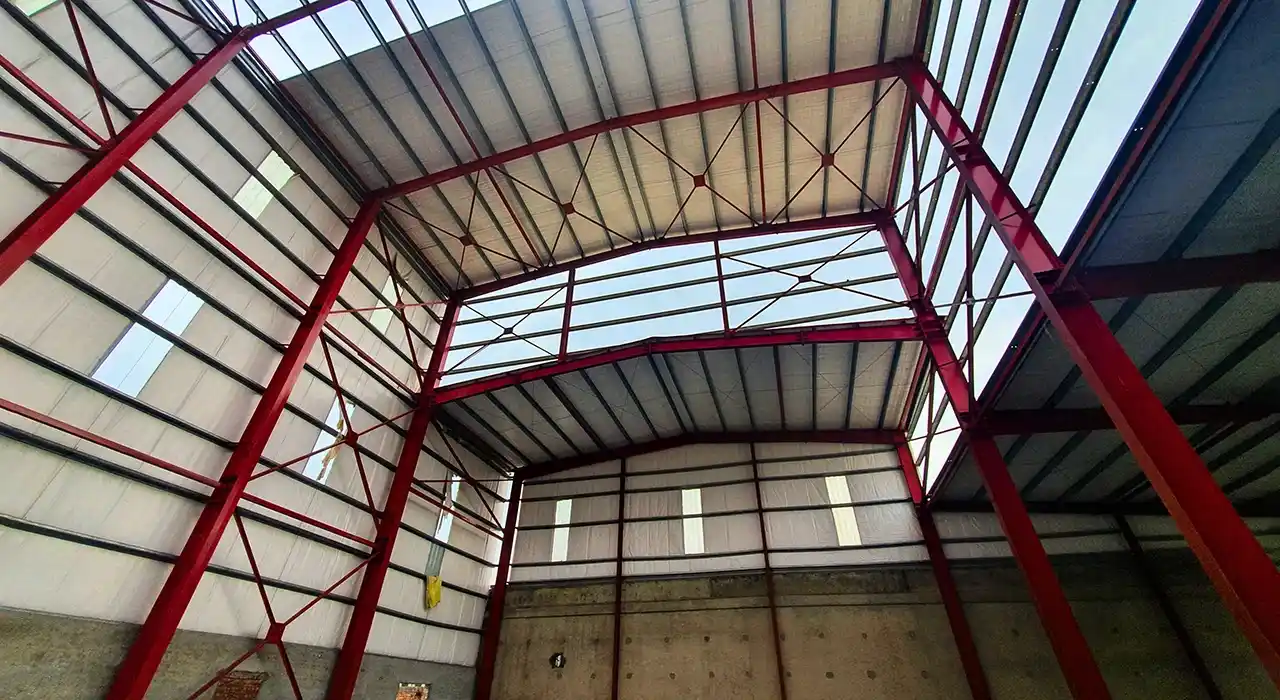
A PEB for packages and paper mills faces conditions almost no other factory does. A paper machine hall runs day and night in steam and high humidity, with pulping chemicals in the air and heavy rolls swinging overhead. The steel does not just hold up a roof; it survives an atmosphere that eats away at an ordinary frame.
 
Civoool engineers the building around that reality from the first sketch. Members and coatings chosen to resist constant condensation, frames sized for heavy parent-roll cranes and their pull-out zones, and a layout that keeps the machine line, converting plant and roll store working as one.

What Actually Governs a Paper Mill Building Design

A dry warehouse and a running paper mill are different buildings under different rules. Humidity, steam, chemical attack, heavy roll handling, and a real fire load determine the design, and a frame that treats a mill like a plain storage shed will corrode, crack, or burn within a few production years. These are structural realities set at design stage, not finishing choices.
Fix these at the design stage, and a paper mill steel structure will run for decades under punishing conditions. Miss one and it shows fast: rust creeping along a cold-formed purlin in the wet end, a crane that cannot lift a parent roll clear, or a dust fire the layout did nothing to contain. Each is a failure a mill running around the clock cannot absorb without costly downtime.

Humidity and Chemicals Attack the Steel Frame

A paper mill is a wet building by design, and that changes the steel itself. Dryer hoods, steam headers and the wet end fill the air with moisture and pulping chemicals that condense on every surface, so a corrosion-resistant steel building here uses heavy-duty coatings and, in the worst zones, hot-rolled members instead of thin cold-formed sections that rust at the fold.
 
That protection is the difference between a frame that lasts and one that fails mid-campaign. A high-humidity industrial building left with ordinary paint loses sections along fasteners within a few years, and re-steeling a live mill costs far more than the coating. We detail junctions to shed condensation, so water runs off the steel.

Three Heavy-Duty Items Set at Design

01

Wet-Zone Coating

The frame’s coating and member type suit a steam-and-chemical environment, so the wet end does not corrode as with plain steel.

02

Crane and Pull-Out

Bays are sized for heavy roll cranes, and the pull-out space that press rolls and dryer cans need for maintenance access.

03

Fire and Dust

The layout plans account for paper dust and oil fire loads, keeping escape and sprinkler routes clear where residue can accumulate.

Roll Cranes Drive the Machine Hall

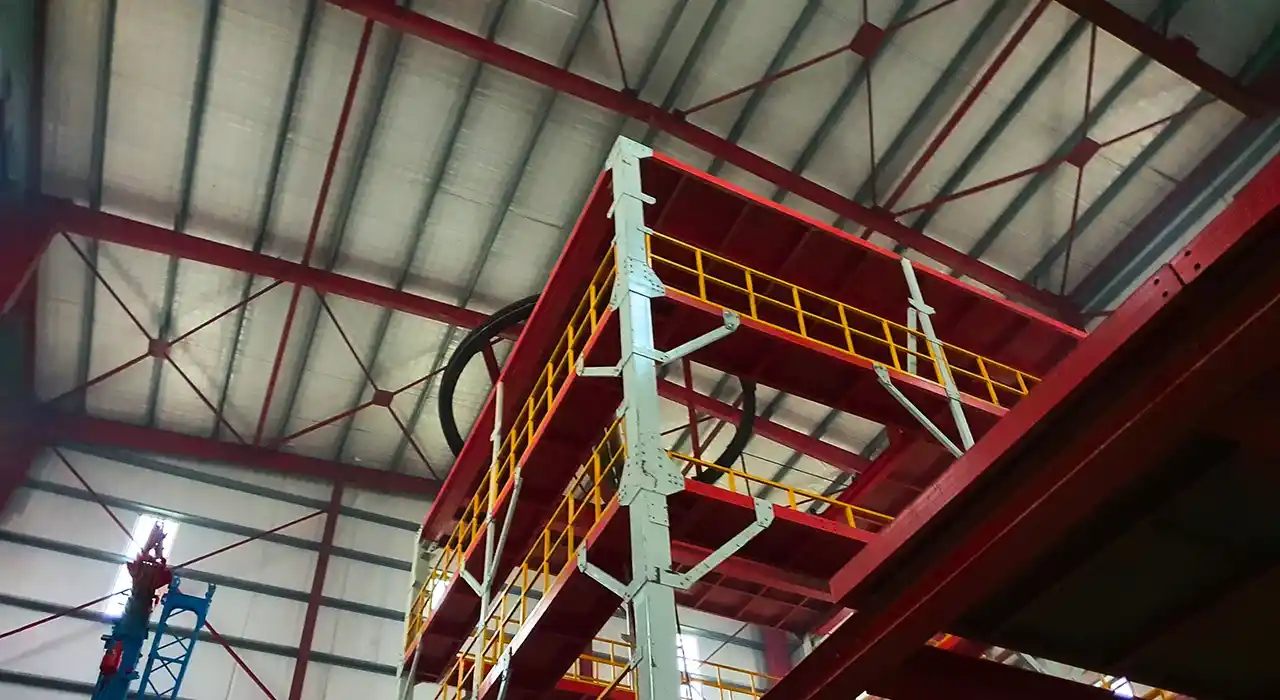
Paper making moves enormous weights: parent rolls often top fifty tonnes, and dryer cans and press rolls are pulled for maintenance while the line runs. In a PEB for packages and paper mills, a heavy crane steel structure carries those A6 to A8 duty cranes in the primary frame, with the runway, walkways and pull-out zones sized from the machine layout rather than added afterwards. Declaring the crane duty and roll weights early lets the frame take them cleanly, because strengthening a mill frame after erection means stopping production.

Storing Finished Rolls Without Damage

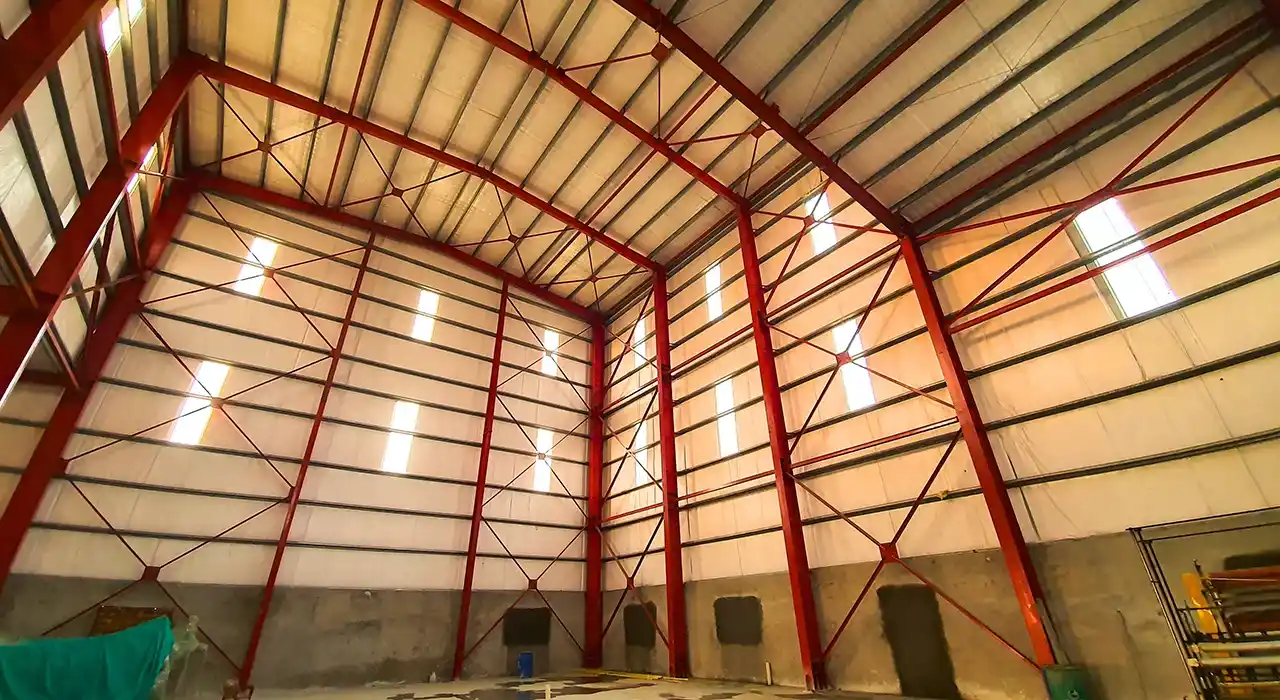
Once made, jumbo rolls are worth a fortune and easily marked, so they are stored and handled with real care. A roll storage warehouse structure provides a tall, column-free bay with crane coverage for stacking and retrieving rolls without edge crush, often climate-controlled so humidity does not spoil the paper. We plan that store as part of the plant, tied to the machine hall by the material flow so rolls move from winder to rack to dispatch without doubling back.

Packaging and Converting Under One Roof

Many sites both make and convert paper, so the building has to serve both functions at once. A packaging plant steel building for corrugating, printing, or box-making runs its own lines and light cranes alongside the mill, each with its own span, services, and clearances. We plan the machine hall, converting plant, and store together, so a clear-span mill building reads as one coordinated site rather than a row of mismatched sheds.

Practical Calls That Move the Budget

Machine Data Fixed First

Confirm the machine layout, roll weights and crane duty before design. They drive span, height, and the frame, and a late change forces rework across members, cranes, and foundations.

Height for the Line

Eave and crane heights follow the paper machine, the roll lift and the pull-out clearance, not a standard figure. Under-size them, and a crane cannot lift a parent roll clear over the running machine line.

Coating to a Wet Mill

Steam, humidity and chemicals decide the coating, not the price list. Frame given a heavy-duty system, hot-rolled members in the worst wet zones, junctions detailed so condensation runs off rather than pooling.

Foundation Priced Separately

The frame, sheeting and accessories are our scope. Foundations carry heavy machinery and crane loads, so they remain a separate line, though we issue the anchor layout and reaction schedule that the civil team needs.

What Actually Lands on Your Site

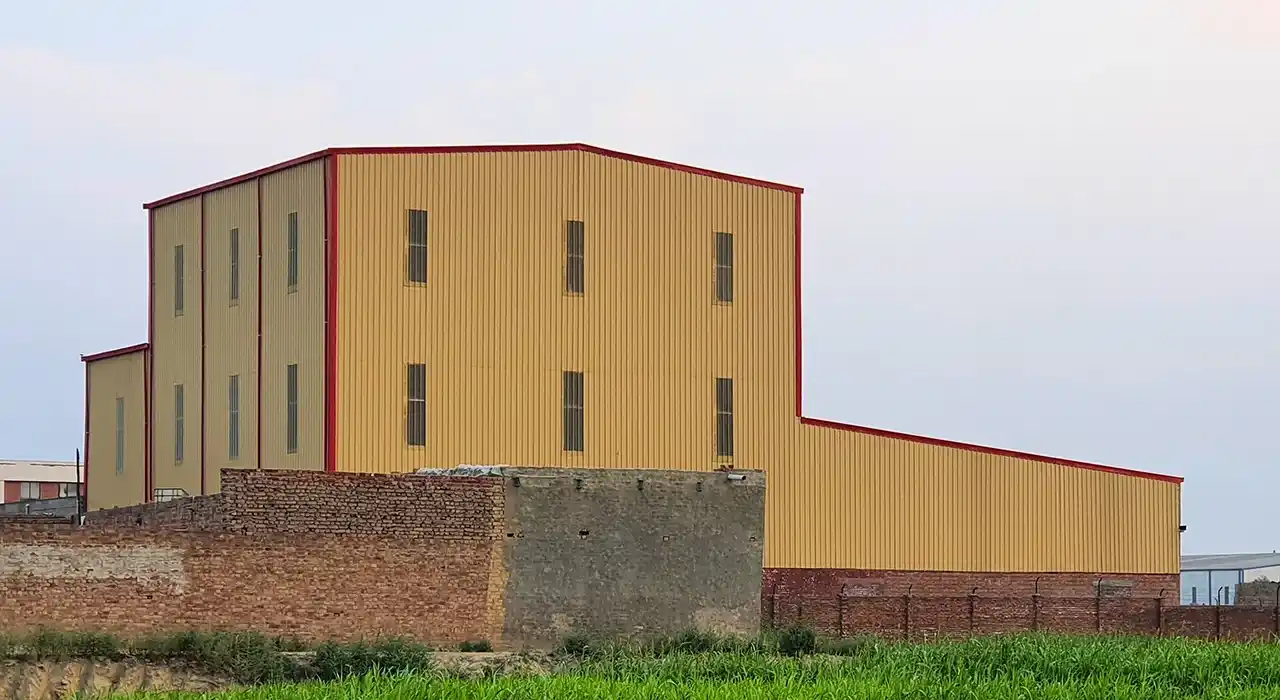
The scope starts from the process, not a standard bay: the machine and crane schedule with weights and duties, the plant layout, the humidity and fire strategy, and the flow between the machine hall, converting, and store. From that brief, Civoool issues stamped calculation reports, GA drawings, shop drawings dimensioned for CNC, an anchor bolt layout with a reaction schedule, and erection drawings with a marking plan per structure. A prefabricated paper mill building and its crane gantries, purlins, and bracing are fabricated in our own workshop under controlled welding and heavy-duty coating; every member is match-marked so the machine hall, converting plant, and roll store assemble exactly as drawn.

Why Coordination Keeps a Mill Moving

A paper mill is dense with piping, cable trays, ducts and cranes, so clashes between steel and services must be caught on the drawing, not during erection at height. We coordinate crane runways, service routes, and machine openings into the model before fabrication, so a steel structure for paper mill use assembles without the on-site cutting that would cost a week and a dozen welds. Members arrive cut, drilled and match-marked, so erection is bolting rather than fabricating.

Where the Money Actually Goes

Paper mill construction cost is driven by span, height, crane duty, coating grade, and the extent of wet-zone protection, so a flat-rate per square foot is misleading: a dry packaging shed and a wet-end machine hall of equal area differ widely in steel and coating. Heavy cranes, hot-rolled members and a mill-grade coating are real cost, not rounding. Honest planning of a packaging factory building cost tells you which savings are safe and which defer expense into early corrosion. Send Civoool your machine and crane schedule, and you get back a scheme with an honest industrial mill shed cost and steel weight.
Testimonial

What Clients Say About Us

FAQs

There is no useful flat rate. A dry packaging shed and a wet-end machine hall of equal area differ markedly once span, crane duty, coating grade, and wet-zone protection are factored in. Anyone quoting a per-square-foot figure before seeing your machine and crane schedule has guessed, not engineered, a real number.

Because a mill is wet, chemically aggressive and heavy. Steam and humidity condense on the steel, pulping chemicals attack it, and parent-roll cranes load it far beyond a warehouse. The frame uses mill-grade coatings, hot-rolled members in the worst zones, and crane-rated bays a plain storage shed never needs.

With a coating system matched to the exposure and the right member type. The frame is given a heavy-duty coating, hot-rolled sections replace thin cold-formed ones in the wettest zones, and junctions are detailed so condensation runs off rather than pooling. Ordinary paint loses section along fasteners within a few years in that atmosphere.

Yes. A heavy crane steel structure carries A6 to A8 duty roll cranes in the primary frame, with the runway, walkways and pull-out zones sized from the machine layout. Declaring the roll weights and crane duty early lets the frame take them cleanly, since strengthening a mill frame after erection means stopping the line.

Yes. A single coordinated structure can house the machine hall, a converting or packaging plant, and a climate-controlled roll store, each with its own span, cranes, and services. We plan them together so material flows from winder to converting to dispatch, and the whole plant reads as one site rather than separate sheds.

Ready to Start Your Project?

Get in touch today for a FREE consultation and customized quote.