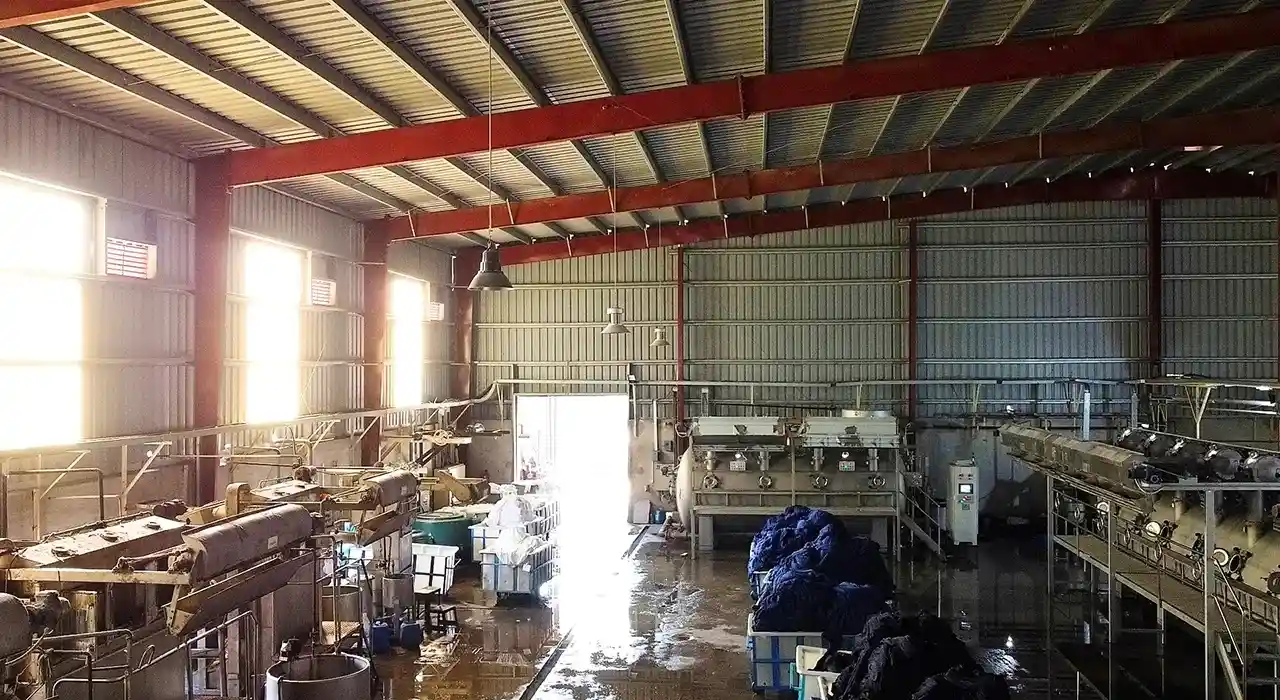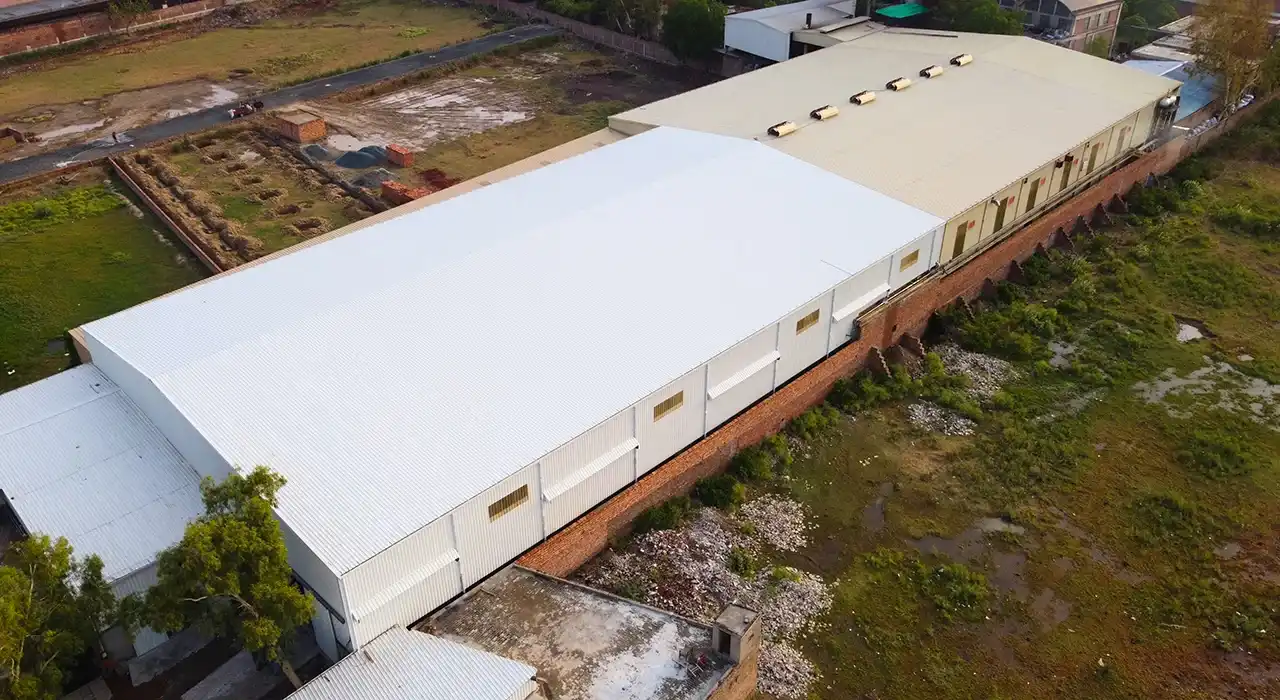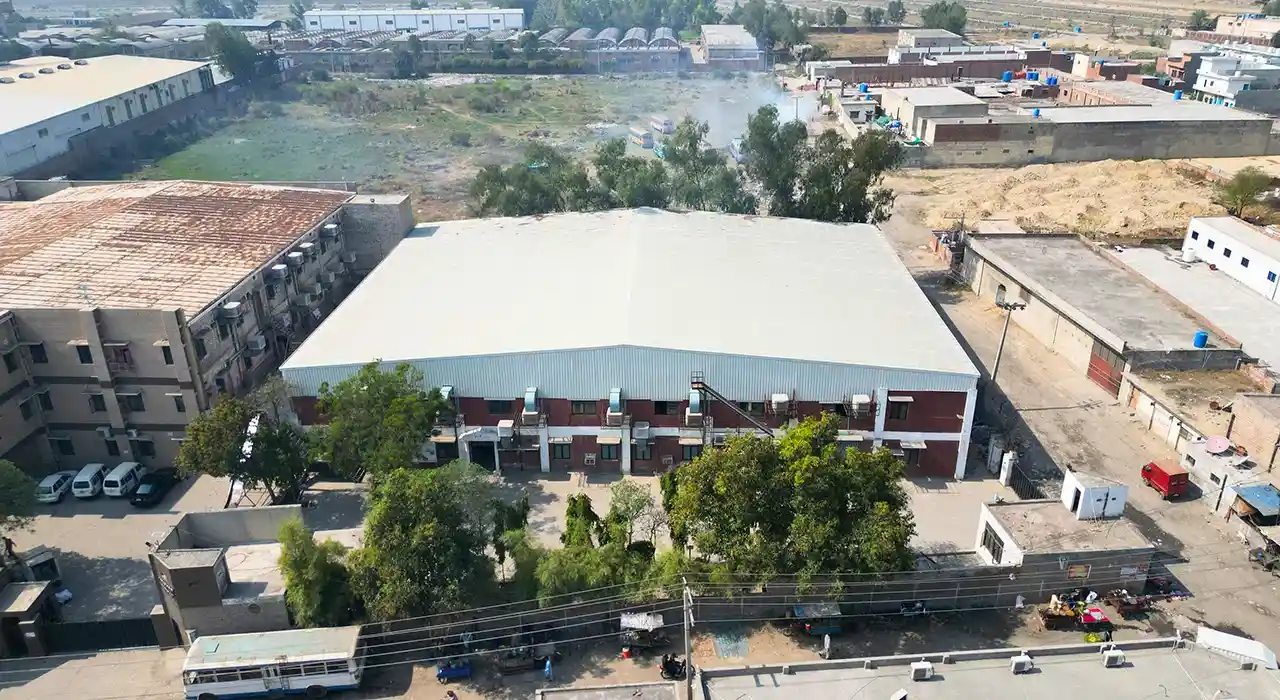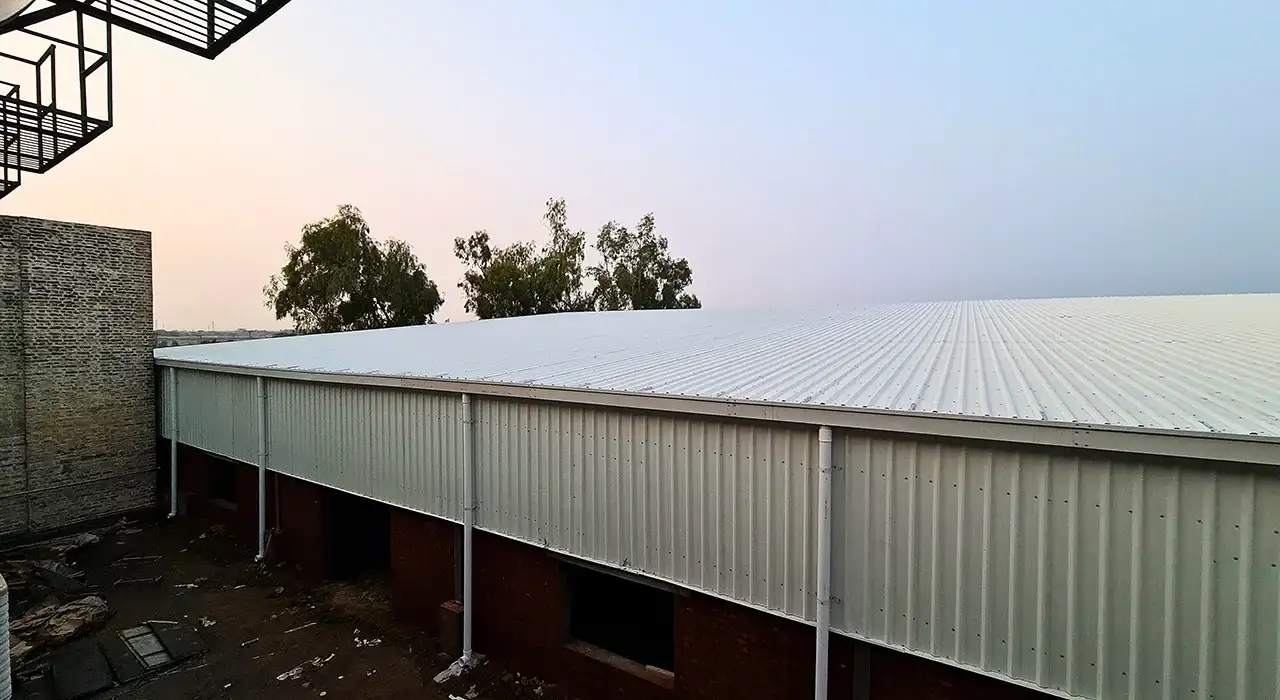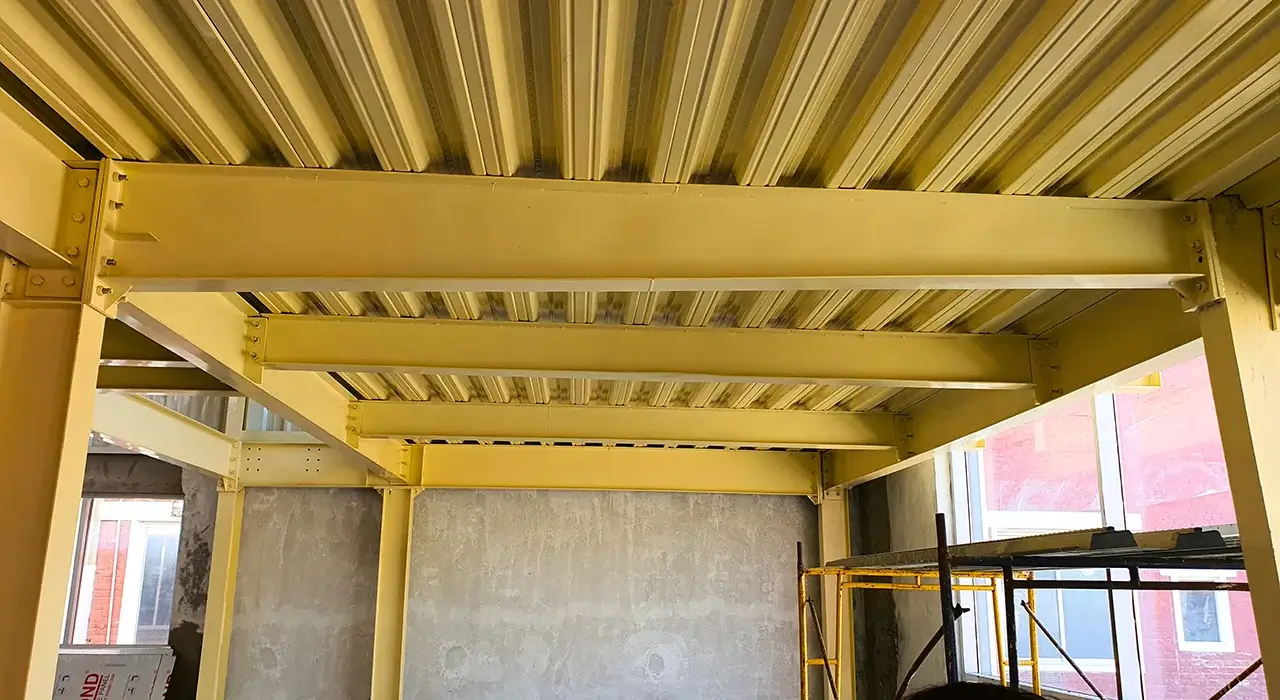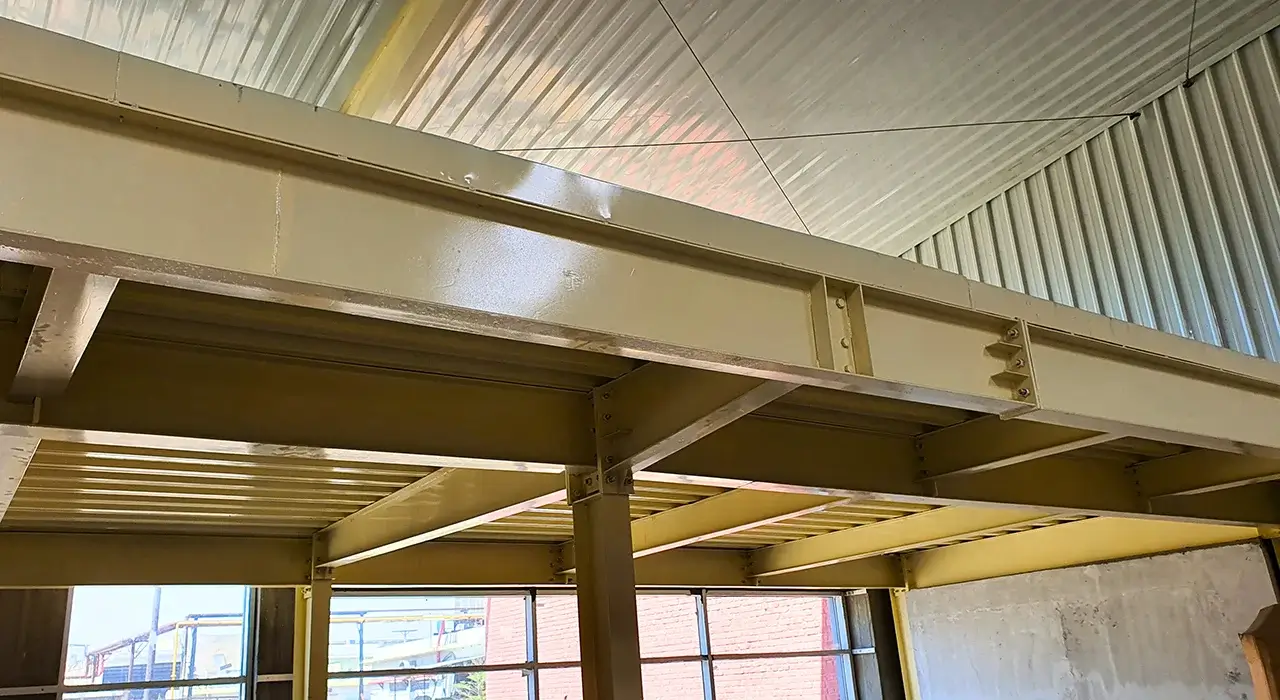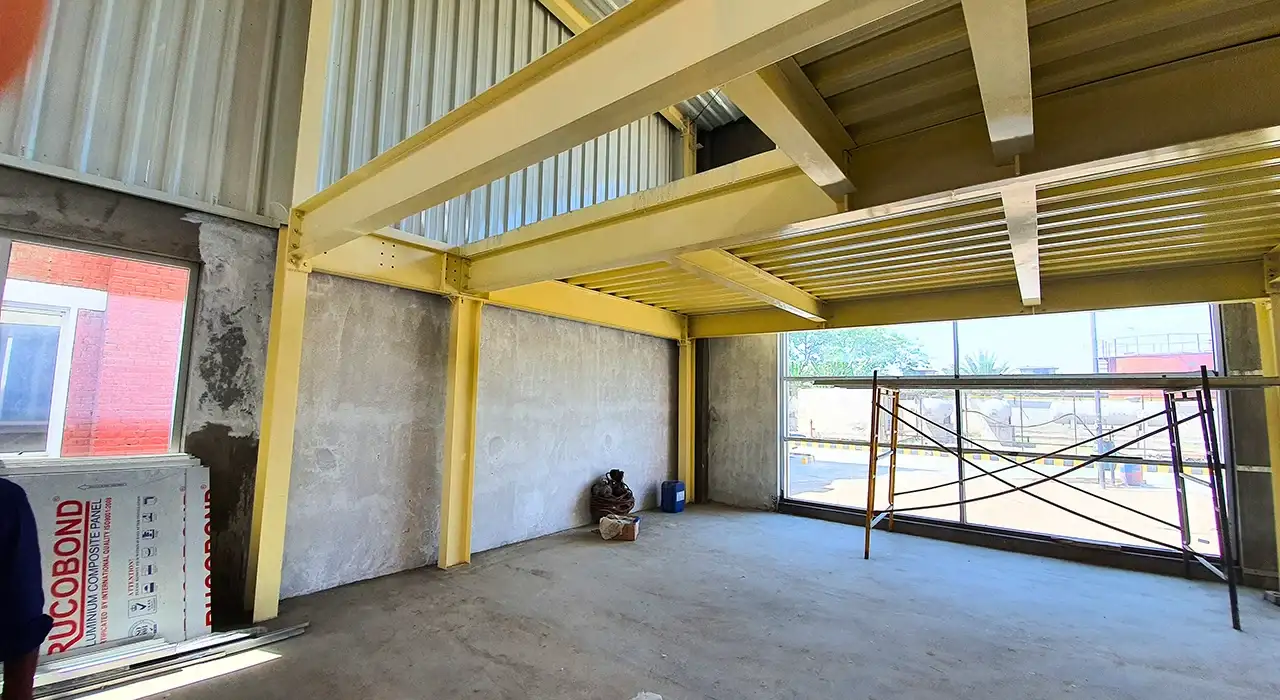
Coatings and insulation are specified together, since a warm dry surface protects steel better than paint alone ever will.
Structural detailing minimises ledges and voids so fibre has fewer places to settle out of sight above the machines.
Frames are sized to support the humidification and extraction plant the process requires, not merely the roof above it.
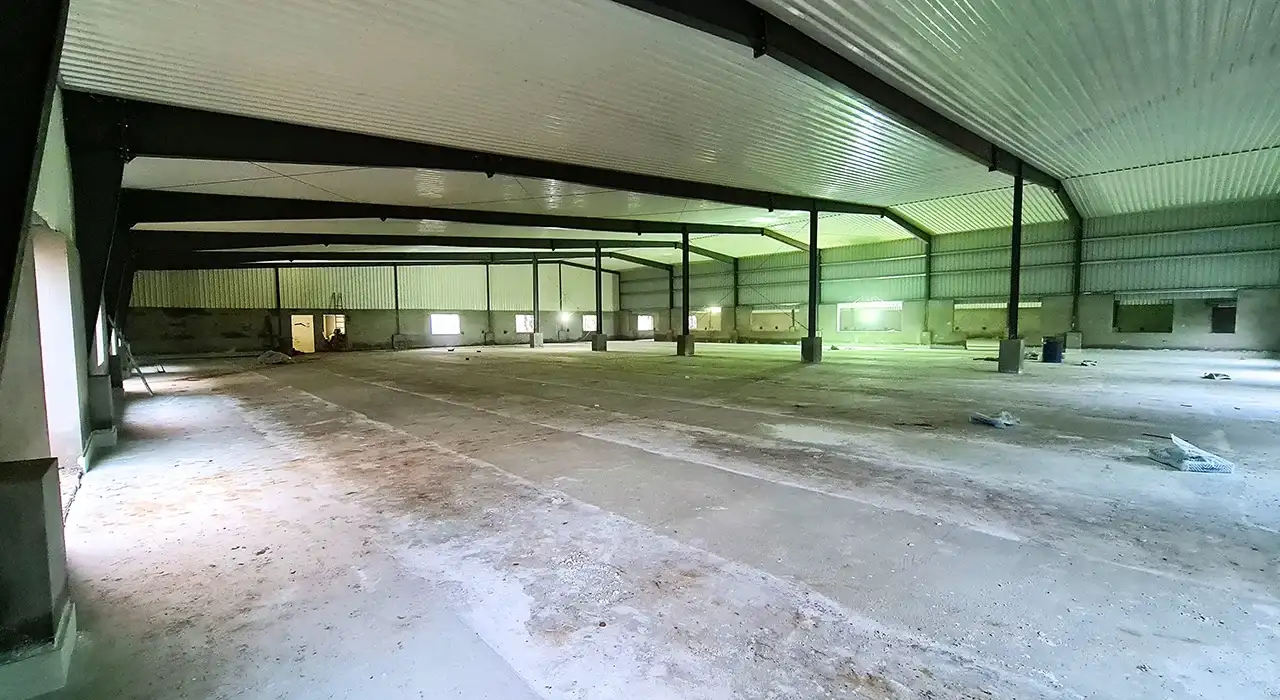
We set bay spacing against your machine layout drawing rather than a standard grid, so that column positions fall on gangways and never interrupt a production line or a maintenance access route.
Looms and ring frames transmit real energy into the floor. Coordinating machine foundation vibration requirements with the slab design early on prevents settlement and the alignment problems that follow.
Fibre dulls rooflights faster than most owners expect. We position openings for cleanable access and combine daylight with artificial lighting rather than relying on glazing that will not stay clear.
Mills tend to add capacity in stages. Designing an end bay as a future connection point lets you extend the shed later by removing a gable rather than disrupting production across the whole plant.
Posted on Google Mian Tariq MehmoodTrustindex verifies that the original source of the review is Google. Expert steel building makerPosted on Google ALEETrustindex verifies that the original source of the review is Google. Prompt and excellent after sales service. Technically sound and reliable. Strongly recommendedPosted on Google Ch Mubeen GujjarTrustindex verifies that the original source of the review is Google. Civoool is the best steel framing structures companyPosted on Google Salman SaeedTrustindex verifies that the original source of the review is Google. 2year
Cotton is typically processed around 70 to 80 percent relative humidity, and weaving rooms run higher. Dry yarn breaks and generates static. For the building, this means permanent damp, so corrosion protection and insulation must be specified for continuous exposure rather than occasional condensation.
By limiting where lint can accumulate unseen. Structural detailing that avoids unnecessary ledges and concealed voids keeps deposits visible and reachable for cleaning. Since friction in carding, spinning, and weaving machines can ignite accumulated fluff, accessible surfaces are a genuine safety contribution.
Not always. A spinning mill building design with full clear span offers maximum layout freedom, but cost rises sharply with width. Where machine rows are fixed, and flow is linear, placing an internal column line along a gangway usually delivers better value without constraining production.
Yes, when it is designed to. Humidification nozzles and distribution ducting are roof-mounted and represent significant load. Duct routes and hanger positions should be fixed during frame design so that members are sized correctly, rather than having services hung from whatever steel is convenient later.
In practice, yes. Insulation keeps interior surfaces above the dew point, which protects the steel from condensation and reduces the load on the humidification and cooling plant. Single-skin sheeting in a permanently humid mill saves money at tender but costs more in corrosion and running expenses.
Get in touch today for a FREE consultation and customized quote.